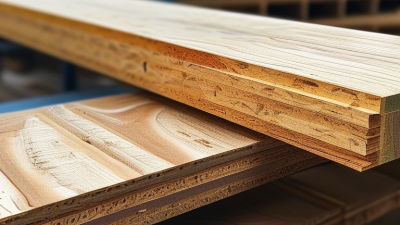
Choosing Waterproof Plywood is not simply a matter of picking the thickest sheet. Moisture exposure, construction purpose, and installation conditions all affect performance. A panel used beneath bathroom tiles faces different risks from one installed beside an outdoor staircase. The wrong choice may swell, delaminate, or lose strength at the edges.
Dr. Robert H. Falk, a respected wood durability researcher, often stresses, “Moisture management is the key to wood durability.” That principle guides every reliable plywood decision. Look for an exterior-grade bonding system, stable veneers, sealed edges, and clear compliance with recognized product standards. Check the core carefully. Voids can collect water like tiny hidden pockets. Examine the surface for open splits, uneven repairs, or signs of poor pressing.
Small details matter.
On practical projects, Waterproof Plywood can still fail when installers leave cut edges unsealed or place sheets directly on wet concrete. Proper spacing, drainage, fasteners, and protective coatings are equally important. Yet no product is completely waterproof in every situation. That wording deserves caution. “Waterproof” often describes resistance under defined conditions, not unlimited exposure.
This guide explains how to compare grades, thicknesses, veneers, adhesives, and certifications. It also considers transport and storage, because a quality panel can be damaged before installation. The best decision balances durability, budget, and actual site conditions. A cheaper sheet may look attractive today, but replacement costs rarely feel cheap later.
Waterproof plywood is not simply plywood that never absorbs water. It is engineered with cross-laminated veneers and moisture-resistant adhesive. This structure improves dimensional stability when humidity changes. The USDA Forest Products Laboratory’s Wood Handbook, 2021, reports that wood moisture content can rise from about 6% at 30% relative humidity to nearly 20% at 90% relative humidity. That change can cause swelling, edge movement, and surface cracking.
For outdoor projects, check the panel’s exposure classification, core quality, and bonding standard. Exterior-grade plywood should use fully waterproof adhesive and pass demanding bond-durability tests. EN 314-2 identifies Class 3 bonding for severe outdoor exposure, including repeated wetting. Still, “waterproof” does not mean “maintenance-free.” Unsealed cut edges can absorb water quickly, especially around screws and floor openings. In practical installation, I have found that edge sealing matters as much as the face veneer. I may be overstating that point, but neglected edges often fail first.
Tips: Match the panel to its exposure level, not its appearance. Inspect the edge for gaps, overlaps, or soft spots. Measure moisture before installation when possible. The USDA handbook notes that wood-based materials perform more predictably near their service moisture level. Seal every cut edge, keep sheets raised from standing water, and allow drainage behind the panel. A thicker sheet may feel stronger, yet poor support spacing can still cause deflection. Check the project’s load requirements rather than guessing.
| Selection Dimension | Recommended Specification or Range | Why It Matters | Typical Applications |
|---|---|---|---|
| Intended exposure | Choose exterior-rated plywood for repeated moisture, rain, or high-humidity conditions. Interior-rated panels are suitable only for dry, protected areas. | “Waterproof” commonly describes the adhesive bond; the wood veneers themselves can still absorb water, swell, or decay if left unprotected. | Exterior walls, roof components, utility structures, damp rooms, and outdoor joinery. |
| Adhesive bond | Look for a weather-resistant or exterior bond verified by the applicable product standard. Phenolic-resin and other structural exterior adhesives are commonly used. | A durable bond helps prevent delamination when the panel experiences wetting, drying, and temperature changes. | Construction sheathing, formwork, outdoor furniture, transport platforms, and marine-related work when specifically rated. |
| Applicable standard | Select a panel manufactured and marked to a recognized standard, such as EN 636 for European plywood or PS 1 / PS 2 where those standards apply. | Standards define performance classes, bonding requirements, grading rules, and permitted uses more reliably than the word “waterproof” alone. | Structural construction, regulated building projects, and applications requiring documented performance. |
| Plywood grade | Choose a structural grade when load-bearing performance is required. Face grades such as A, B, C, or D primarily describe surface quality and allowable defects. | A smooth face does not automatically mean higher structural strength or better water resistance. | Cabinet faces, visible panels, flooring substrates, wall sheathing, and structural framing support. |
| Thickness | Common construction thicknesses are approximately 6, 9, 12, 15, 18, and 25 mm; select thickness according to span, load, support spacing, and local requirements. | Increasing thickness generally improves stiffness and load capacity, but design calculations are still required for structural work. | 6–9 mm for lining and light panels; 12–18 mm for many sheathing and furniture uses; 18–25 mm for heavier-duty work. |
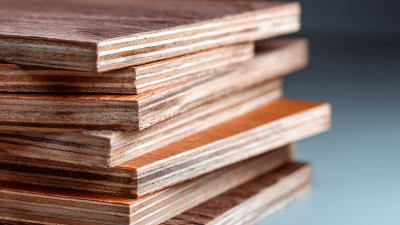
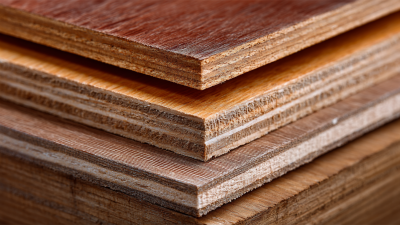
| Panel construction | Prefer balanced, cross-laminated veneers with a sufficient number of plies for the panel thickness and intended load direction. | Alternating grain directions improve dimensional stability and distribute loads across the panel. | Subfloors, roof decking, wall panels, work platforms, and built-in furniture. |
| Moisture exposure level | For intermittent wetting, use an exterior-bond panel with sealed edges. For continuous immersion or boatbuilding, use a product specifically tested and approved for marine service. | Exterior plywood is not automatically suitable for permanent immersion or below-waterline use. | Intermittent exposure: exterior construction; continuous immersion: purpose-designed marine applications. |
| Surface condition | Choose sanded panels for visible or painted surfaces and unsanded panels where appearance is not critical. Inspect for open joints, splits, delamination, and damaged edges. | Surface defects can allow water ingress and may reduce coating quality or service life. | Furniture and finish work: sanded; sheathing and temporary formwork: unsanded may be sufficient. |
| Edge protection | Seal all cut edges, drilled holes, and exposed end grain with a compatible exterior coating or sealant. | End grain and newly cut edges absorb water faster than coated faces and are common entry points for moisture. | Outdoor panels, bathroom cabinetry, decks, planters, and exterior enclosures. |
| Dimensional movement | Allow installation gaps recommended by the project specification; a gap of about 3 mm is commonly used between structural panels, subject to local requirements. | Plywood expands and contracts with changes in moisture content. Tight joints can cause buckling or edge damage. | Roof decking, wall sheathing, flooring substrates, and large exterior panels. |
| Typical density | Approximately 400–700 kg/m³, depending on wood species, veneer structure, moisture content, and manufacturing process. | Density affects panel weight, screw-holding ability, stiffness, handling, and transport requirements. | Lightweight interior fit-outs, general construction, heavy-duty platforms, and transport components. |
| Fastener compatibility | Use corrosion-resistant or stainless-steel fasteners in damp or exterior environments, with spacing specified for the panel and support system. | Moisture can accelerate corrosion, while incorrect fastener spacing can cause panel pull-out or edge splitting. | Exterior cladding, decks, wet-room fixtures, roofing, and outdoor furniture. |
| Surface finishing | Apply a compatible primer, paint, stain, or protective coating to faces and especially to all edges when long-term outdoor exposure is expected. | A waterproof adhesive does not replace a complete moisture-management system or protective finish. | Exterior furniture, wall panels, doors, signs, storage boxes, and garden structures. |
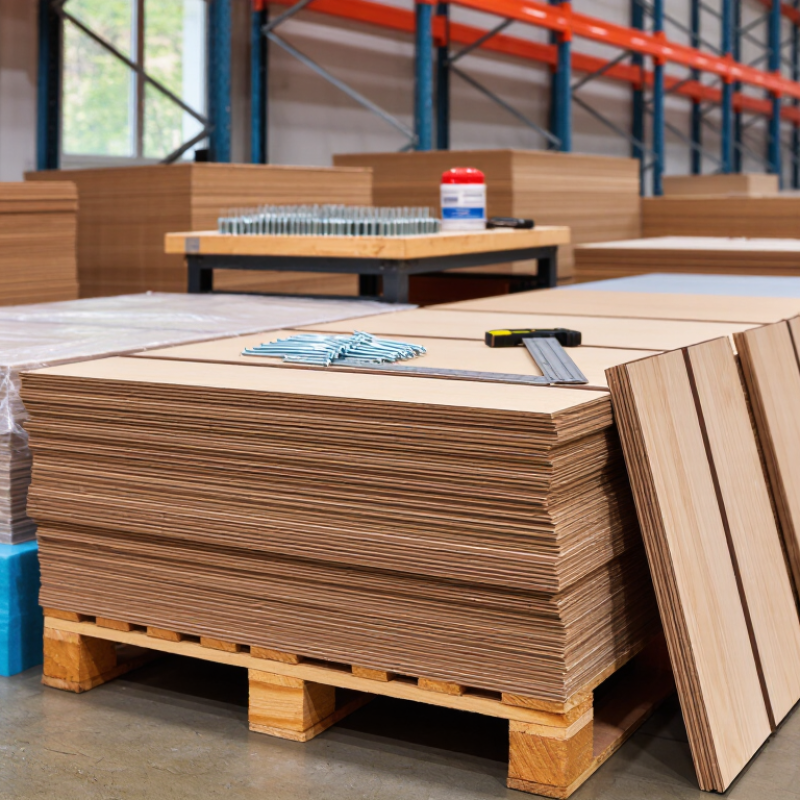
| Storage before installation | Store panels flat, supported, dry, and raised from the ground; protect them from direct rain and allow acclimatization before installation. | Poor storage can cause warping, edge swelling, staining, and moisture-related defects before the plywood is used. | All plywood projects, especially construction sites and outdoor installations. |
| Quality inspection | Reject panels with visible delamination, severe warping, broken plies, excessive core gaps, fungal staining, or badly damaged edges. | Visual inspection helps identify defects that may reduce strength, durability, appearance, or moisture resistance. | Before purchase, cutting, coating, and installation in every application. |
Note: Performance varies by wood species, manufacturing process, panel grade, standard, and installation conditions. Always verify the product marking, technical data sheet, local building requirements, and design loads before use.