Premium Plywood is no longer judged by appearance alone. Global buyers now examine core construction, bonding performance, emissions, traceability, and delivery consistency.
The market is large, but quality remains uneven. FAO forestry statistics show that wood-based panels form a major part of international forest-product trade. The FAO Yearbook of Forest Products also highlights strong production and export activity across Asia, Europe, and the Americas. Meanwhile, the UNECE/FAO Forest Products Annual Market Review records changing demand, freight pressure, and regional supply risks. These trends make supplier selection more technical than a simple price comparison.
This guide introduces ten Premium Plywood suppliers serving international buyers. It considers manufacturing experience, veneer quality, panel stability, moisture control, certification systems, and export documentation. Relevant benchmarks may include ISO 12465, EN 13986, CARB Phase 2, and FSC chain-of-custody requirements, depending on the destination market. Buyers should verify each claim directly, because certificates can cover specific factories or product lines only.
Look closely at the details.
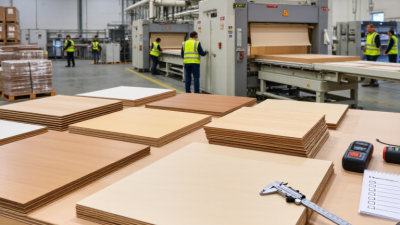
A reliable supplier should provide recent test reports, clear panel grades, calibrated thickness data, and practical packaging specifications. A 2440 × 1220 mm sheet should arrive flat, dry, and protected from edge damage. That sounds basic. It is not always basic in real shipments.
The ranking is not absolute. Product suitability changes with application, climate, budget, and regulatory expectations. Some suppliers offer impressive capacity but limited customization. Others provide excellent face veneers while lacking strong export support. That limitation deserves attention. This overview therefore combines published industry evidence with buyer-focused evaluation, while recognizing that market data and supplier claims require ongoing verification.

Premium plywood is not defined by appearance alone. Global buyers should examine EN 636, EN 314-2, ASTM D3043, and E1 emission limits together.
EN 636 classifies plywood for dry, humid, or exterior conditions. The correct class depends on moisture exposure, not marketing language. A smooth face can still hide weak cores or poor bonding.
EN 314-2 evaluates bond quality through bonding classes. Class 1 suits dry interiors, while Classes 2 and 3 address humid or exterior exposure.
These classes do not prove every panel will perform perfectly on site. ASTM D3043 measures structural panel performance in flexure. It helps assess bending strength and stiffness. It does not replace bonding or formaldehyde testing.
Request test reports that identify thickness, grain direction, conditioning, and failure results.
E1 limits focus on formaldehyde emissions. Under common European chamber testing, E1 means emissions no higher than 0.124 mg/m³. Some documents also reference perforator results near 8 mg/100 g.
Check the exact test method and unit. They are not interchangeable. During supplier evaluation, compare recent reports with the ordered specification, then inspect panel edges, voids, thickness tolerance, and surface repairs.
A practical warning: one test sample may not represent an entire shipment. Even experienced buyers can overlook batch variation.
Ask for production dates and independent verification when the application is sensitive.
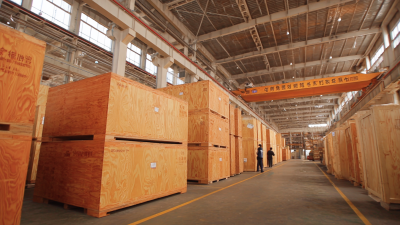
A serious comparison of ten plywood manufacturers should examine capacity and export reach together. FAOSTAT’s Forestry Production and Trade database shows how national plywood output differs from export performance. UN Comtrade data for HS 4412 adds shipment evidence. These sources help buyers test factory claims against market activity.
Rate each supplier across annual production, veneer-drying capacity, and export destinations. A factory reporting 300,000 cubic metres may still have limited export-grade output. ITTO’s Biennial Review and Assessment of the World Timber Situation highlights the importance of legal wood supply and traceability. Buyers should request certification scope, not just certificate copies. Container loading photos, recent bills of lading, and moisture-test records reveal practical reliability. Capacity alone is a weak proxy.
Tips: Build a simple scorecard for all ten manufacturers. Give capacity 30%, export coverage 30%, quality systems 25%, and response speed 15%. Check shipment history across at least two years. One strong season proves little. Also compare port distance, minimum order quantity, panel thickness tolerance, and replacement procedures. A supplier with fewer destinations may still be safer if documentation is consistent. That shortcut can fail. Recheck every figure before signing.
Top 10 Premium Plywood Suppliers for Global Buyers?
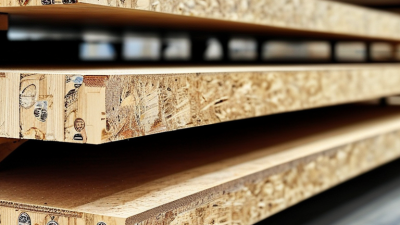
A reliable ranking begins with measurable quality, not polished brochures. Face grade should show consistent grain, tight joints, and minimal patches. Inspect the sheet under bright side lighting. Small open defects often appear near the edges. Core voids deserve equal attention. A smooth face can hide weak internal bonding. Cut sample edges, tap the panel, and request cross-section evidence. Laboratory scans can help, but physical samples remain valuable.
Moisture content affects bonding, weight, and later warping. Use a calibrated meter on several points, not one convenient corner. The acceptable range depends on the plywood type, climate, and agreed specification. Thickness also needs disciplined control. A stated ±0.3 mm tolerance should be checked with a micrometer across multiple sheets. Supplier records should include batch numbers, inspection dates, test methods, and corrective actions. This is where credibility becomes visible. A perfect report is not always a perfect shipment.
Tips: Ask for three production samples, not one. Compare the face, core, and thickness separately. Confirm how measurements were taken. I once trusted a clean sample too quickly; the bulk order showed uneven cores. That mistake still shapes my inspection checklist. Suppliers with clear traceability usually answer difficult questions faster. Never treat silence as proof of quality.
Quality ranking based on face grade consistency, core-void control, moisture compliance, and dimensional tolerance of ±0.3 mm or better.
Scores are normalized quality indices from 0 to 100. Face-grade scoring reflects consistent A/B or equivalent clear-face specifications; core-void scoring reflects reduced internal gaps; moisture scoring uses the commonly specified 8–14% range for plywood shipments; tolerance scoring rewards panels meeting ±0.3 mm dimensional control. Supplier identities are intentionally anonymized, and the chart is intended for comparative purchasing evaluation rather than an audited certification.
Premium Plywood Suppliers for Global Buyers
A reliable supplier profile begins with verified certifications, not polished photographs. One supplier may hold FSC chain-of-custody approval and EN 314 bonding records, while another focuses on CARB Phase 2 and EPA TSCA compliance. Buyers should request current certificates, test reports, and factory audit dates. Documents can expire.
Among the leading profiles, one producer operates a 200,000-cubic-meter annual line and offers birch, poplar, and eucalyptus panels. Another runs a smaller 60,000-cubic-meter facility, specializing in marine-grade hardwood plywood. A third supplies radiata pine in 1220 × 2440 mm sheets, with thicknesses from 3 to 25 mm. One supplier focuses on film-faced panels for concrete work, while another produces furniture-grade panels with calibrated cores. Their species, glue systems, and face grades differ sharply. Compare samples.
A sixth supplier provides flexible cut-to-size production, including 1220 × 3050 mm panels for transport interiors. A seventh combines rotary-cut veneers with phenolic resin and publishes formaldehyde test results. An eighth serves heavy-volume construction buyers through multiple pressing lines and palletized export packing. A ninth specializes in lightweight paulownia and poplar cores, although lower density may reduce screw-holding strength. The tenth offers mixed hardwood panels, custom overlays, and thickness tolerances near ±0.2 mm. Production scale sounds impressive, but consistency matters more. Inspect recent batches, verify species identification, and confirm moisture levels before signing a long-term order.
| Profile | Primary Supply Region | Premium Plywood Categories | Common Wood Species | Certification and Compliance Coverage | Indicative Annual Production Scale | Standard Panel Sizes | Available Thicknesses | Typical Global-Buyer Applications |
|---|---|---|---|---|---|---|---|---|
| Supplier Profile 01 | Northern Europe | Structural softwood plywood; exterior-grade panels | Scots pine, Norway spruce, European birch | FSC or PEFC chain of custody; CE marking where applicable; EN 636 exterior classes; E1 formaldehyde classification | 30,000–60,000 m³/year | 2,440 × 1,220 mm; 2,500 × 1,250 mm; custom lengths available | 9–30 mm | Construction, flooring substrates, packaging, roof and wall sheathing |
| Supplier Profile 02 | Eastern Europe | Premium birch plywood; film-faced construction panels | Silver birch, downy birch, poplar core options | FSC or PEFC options; E1 or CARB Phase 2 compliant grades; EN 314 bonding classes; CE documentation for applicable products | 50,000–100,000 m³/year | 1,250 × 2,500 mm; 1,500 × 3,000 mm; oversized formats by order | 6.5–40 mm | Furniture, shopfitting, transport floors, concrete formwork |
| Supplier Profile 03 | South America | Exterior hardwood plywood; structural and marine-grade panels | Eucalyptus, pine, tropical hardwood face veneers | FSC chain of custody options; EN 314-2 Class 3 bonding; E1 low-emission grades; formaldehyde testing available | 40,000–80,000 m³/year | 2,440 × 1,220 mm; 2,500 × 1,250 mm; 3,050 × 1,530 mm | 4–30 mm | Marine interiors, truck bodies, structural components, outdoor construction |
| Supplier Profile 04 | East Asia | Commercial hardwood plywood; decorative and furniture-grade panels | Poplar, eucalyptus, mixed hardwood, okoumé face veneer | FSC availability varies by production line; E1 and CARB Phase 2 grades; EN 314 bonding classifications; ISO 9001 quality systems commonly available | 80,000–150,000 m³/year | 2,440 × 1,220 mm; 2,500 × 1,250 mm; 2,440 × 1,830 mm | 3–25 mm | Cabinetry, furniture components, interior decoration, retail fixtures |
| Supplier Profile 05 | Southeast Asia | Marine plywood; tropical hardwood and okoumé-faced panels | Keruing, meranti, okoumé, eucalyptus core | FSC-certified material options; EN 314-2 Class 3 bonding; BS 1088-based marine specifications where ordered; E1 emission grades | 25,000–70,000 m³/year | 2,440 × 1,220 mm; 2,500 × 1,250 mm; 3,000 × 1,500 mm | 4–25 mm | Boatbuilding, outdoor furniture, vehicle interiors, wet-area construction |
| Supplier Profile 06 | North America | Structural plywood; sanded softwood and industrial panels | Douglas fir, southern yellow pine, western softwoods | APA-rated structural grades; PS 1 or PS 2 compliance; CARB Phase 2 or TSCA Title VI; FSC and PEFC options | 100,000–250,000 m³/year | 2,440 × 1,220 mm; 2,500 × 1,250 mm; 3,050 × 1,220 mm | 6–32 mm | Residential construction, industrial packaging, flooring and wall systems |
| Supplier Profile 07 | Oceania | Radiata pine structural plywood; exterior treated panels | Radiata pine, plantation-grown softwood | AS/NZS 2269 structural plywood compliance; FSC or PEFC options; E0 or E1 emission grades; preservative-treatment documentation | 30,000–75,000 m³/year | 2,400 × 1,200 mm; 2,700 × 1,200 mm; 3,600 × 1,200 mm | 7–25 mm | Building frames, flooring, bracing, agricultural and outdoor structures |
| Supplier Profile 08 | Western Europe | Birch and beech plywood; precision-machined industrial panels | European birch, beech, poplar core | FSC or PEFC chain of custody; CE and EN 13986 documentation; E1 or E0 emission grades; ISO 9001 production controls | 20,000–50,000 m³/year | 2,500 × 1,250 mm; 3,000 × 1,500 mm; CNC-ready custom formats | 4–50 mm | High-end furniture, architectural interiors, stairs, machinery components |
| Supplier Profile 09 | South Asia | Hardwood commercial plywood; calibrated and fire-retardant panels | Gurjan, eucalyptus, rubberwood, mixed hardwood | FSC options; IS 303 or equivalent product testing; E1 and CARB Phase 2 grades; fire-retardant test reports available for specified products | 40,000–90,000 m³/year | 2,440 × 1,220 mm; 2,500 × 1,250 mm; 2,750 × 1,220 mm | 3–25 mm | Residential furniture, commercial interiors, doors, partitions and cabinetry |
| Supplier Profile 10 | Middle East and Mediterranean | Film-faced plywood; exterior poplar and eucalyptus plywood | Poplar, eucalyptus, pine and mixed hardwood | FSC or PEFC options; EN 314-2 bonding classes; CE documentation where applicable; E1 low-emission grades; ISO 9001 systems commonly used | 35,000–85,000 m³/year | 2,500 × 1,250 mm; 3,000 × 1,500 mm; 3,660 × 1,830 mm | 9–30 mm | Concrete formwork, infrastructure projects, transportation, exterior construction |
Certification scope, species composition, production capacity, panel dimensions and compliance status should be confirmed against the supplier’s current technical datasheets, audit records and shipment-specific documentation before purchasing.
A premium plywood supplier should survive careful questioning, not just present polished photographs. Ask for the exact MOQ by thickness, grade, face veneer, and panel size. A 1,000-sheet MOQ may become 1,500 sheets after mixed specifications are rejected. Request a written lead-time schedule covering veneer preparation, pressing, sanding, packing, and port delivery. Confirm whether production starts after deposit or after artwork approval.
Incoterms must be stated clearly on the quotation. FOB, CIF, and DDP create different cost and risk responsibilities. Check the named port, insurance scope, export documents, and who pays destination charges. Require recent test reports from an accredited laboratory, not only a factory-issued certificate. Reports should identify the panel construction, adhesive system, production date, and tested emission result. CARB Phase 2 compliance should be verified against the applicable panel category and current market requirements. A logo alone proves little. Ask for traceable batch records and permission for independent pre-shipment inspection.
Small details often expose weak controls. Measure ten panels from different bundles, inspect edge gaps, and check moisture with a calibrated meter. Photograph damaged corners before loading. Payment terms deserve equal attention; avoid accepting vague promises about replacement claims. The uncomfortable truth is that even reliable suppliers can miss a tolerance during a busy season. I would leave room for re-testing, delays, and disagreement. Perfect paperwork is not perfect plywood. A written corrective-action process makes that weakness manageable.