China Best Hardwood Plywood Manufacturer and Supplier
Hardwood Plywood supports demanding applications, from furniture panels to interior doors and commercial fixtures. Its value depends on more than surface appearance. Veneer quality, core construction, bonding strength, moisture control, and finishing performance all matter. Experienced buyers know that a smooth face can hide weak inner layers.
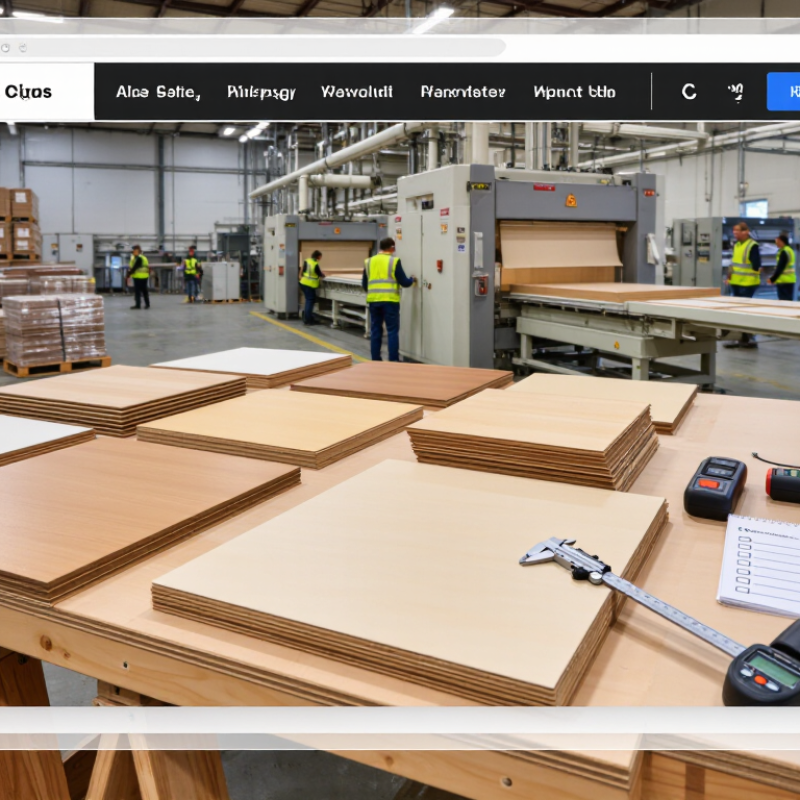
A reliable Chinese manufacturer should provide clear specifications and consistent production records. This includes wood species, thickness tolerance, formaldehyde class, adhesive type, and available surface grades. Practical inspections may include visual checks, caliper measurements, moisture testing, and bonding evaluations. Samples should be reviewed before large orders. Small details often become expensive problems later.
We understand the pressure behind every shipment. Panels must arrive flat, clean, accurately sized, and ready for processing. Production teams should monitor veneer peeling, drying, lay-up, pressing, sanding, and packing. Export experience also requires careful documentation and communication. However, no supplier should promise perfection. Natural wood varies, and production can still reveal unexpected color differences or core imperfections. Honest reporting is better than impressive wording.
Our role as a China Best Hardwood Plywood Manufacturer and Supplier is to build dependable cooperation. We match panel performance with real project requirements, not vague assumptions. Buyers may need structural stability, decorative grain, low emissions, or custom dimensions. Each requirement deserves technical discussion. With transparent inspection, responsive service, and continuous improvement, Hardwood Plywood becomes more than a purchased panel. It becomes a controlled material choice for long-term results.
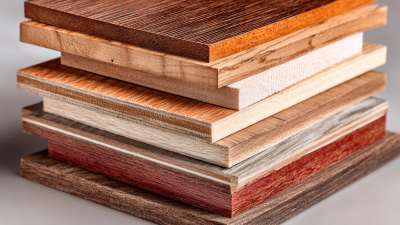
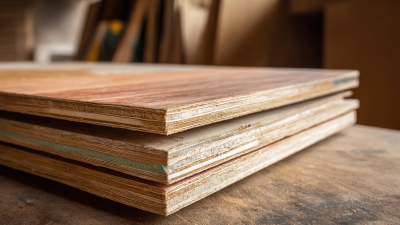
Hardwood plywood is an engineered panel made from thin hardwood veneers bonded in layers. Each veneer is usually rotated 90 degrees against the next one. This cross-layer structure improves stability and distributes stress. The face veneer provides appearance, while the inner plies build strength and thickness. A balanced panel usually has an odd number of layers. It helps reduce twisting during humidity changes.
Core construction matters more than a smooth surface suggests. A dense, uniform core supports screws and resists edge damage. Gaps, overlaps, or loose patches can weaken the panel. Hardwood plywood offers good stiffness, impact resistance, and a clean machining surface. Its performance depends on veneer quality, adhesive selection, pressing control, and moisture exposure. In practice, attractive panels can fail because their cores were poorly assembled. That detail is easy to miss. No panel is perfect.
Tips: Check the panel edges under bright light. Look for open gaps, uneven layers, and swelling. Tap the surface gently; dull areas may indicate internal voids. Choose thickness and grade for the actual load, not appearance alone. Store sheets flat, dry, and raised from the floor. Let them acclimate before cutting. Measurements can shift slightly.
| Dimension | Key Information | Typical Specifications or Characteristics | Practical Relevance |
|---|---|---|---|
| Definition | Hardwood plywood is an engineered wood panel made by bonding thin wood veneers together with adjacent grain directions generally arranged at right angles. | A layered panel combining the appearance of selected hardwood species with the dimensional stability of cross-laminated construction. | Used for furniture, cabinetry, interior joinery, wall panels, doors, flooring components, and selected structural applications. |
| Basic Structure | The panel normally consists of a face veneer, one or more core layers, and a back veneer. | Most panels use an odd number of plies to keep the construction balanced around the center layer. | Balanced construction helps limit cupping, twisting, and uneven movement caused by changes in moisture. |
| Face Veneer | The face is the visible hardwood surface selected for grain pattern, color, texture, and defect level. | Common face species include oak, birch, maple, walnut, ash, beech, and tropical hardwoods, depending on availability and specification. | Determines the panel’s visual quality, finishing appearance, and suitability for exposed surfaces. |
| Core Construction | The core provides most of the panel’s thickness and contributes substantially to stiffness, screw holding, and machining performance. | Core options include rotary-cut hardwood veneer, sliced veneer, poplar, eucalyptus, birch, mixed hardwood, or engineered composite core. | Core selection affects weight, flatness, edge appearance, strength, cost, and surface quality after cutting. |
| Grain Orientation | Adjacent veneer layers are generally cross-banded, with grain directions alternating through the panel. | Cross-lamination distributes stresses across the panel and reduces directional weakness compared with a single solid-wood board. | Improves dimensional stability and allows reliable panel performance in both length and width directions. |
| Common Thicknesses | Thickness is selected according to the intended load, span, machining method, and design requirements. | Common commercial thicknesses include approximately 3, 5, 6, 9, 12, 15, 18, 21, and 25 mm, although availability varies by market and product grade. | Thicker panels generally provide greater stiffness and screw engagement but also increase weight and material use. |
| Density and Weight | Density depends on the wood species, core composition, adhesive content, moisture level, and manufacturing process. | Typical hardwood plywood density is approximately 450–750 kg/m³; individual products may fall outside this range. | Density influences transportation cost, handling, fastener holding, impact resistance, and overall panel strength. |
| Dimensional Stability | Cross-laminated veneers reduce, but do not eliminate, dimensional movement caused by moisture changes. | Panel movement is usually lower and more uniform than that of solid wood of comparable dimensions. | Suitable for large surfaces where flatness and consistent dimensions are important, provided the panel is properly stored and installed. |
| Strength and Stiffness | Strength depends on species, veneer quality, thickness, ply arrangement, bonding quality, and loading direction. | Hardwood plywood generally offers good bending strength, panel stiffness, impact resistance, and load distribution. | Performance should be verified against the applicable structural standard when the panel is used for load-bearing purposes. |
| Surface Quality | Surface grades classify the presence of knots, splits, patches, discoloration, mineral streaks, and other visible characteristics. | Higher appearance grades have fewer visible defects and are more suitable for clear finishing, while utility grades may contain repaired or natural features. | The required face grade should match whether the panel will be painted, laminated, veneered, or left naturally exposed. |
| Moisture Resistance | Moisture resistance is determined mainly by adhesive type, veneer quality, panel construction, edge protection, and exposure conditions. | Interior-grade panels are intended for dry conditions; exterior or weather-resistant grades are designed for more demanding exposure but are not automatically waterproof. | Product classification must be checked before use in kitchens, bathrooms, façades, outdoor furniture, or other humid environments. |
| Formaldehyde Emissions | Emissions depend on the resin system, manufacturing process, panel construction, and applicable regulatory requirements. | Products may be manufactured to emission classifications such as E1 or to market-specific requirements such as CARB Phase 2 or TSCA Title VI. | Always request current test reports or compliance documentation for projects with indoor-air-quality requirements. |
| Machining and Fastening | Hardwood plywood can generally be sawn, drilled, routed, sanded, glued, and fastened using standard woodworking equipment. | Cut edges may reveal core gaps or veneer layers, while high-density species may require sharp tools and controlled feed rates. | Suitable for precision components, cabinet parts, shelving, drawer boxes, and custom joinery when the correct grade is selected. |
| Finishing Compatibility | The surface can commonly receive paint, clear coating, stain, laminate, decorative paper, or natural-oil finishes after appropriate preparation. | Sanding quality, face species, veneer thickness, and surface cleanliness affect final finish uniformity. | A sample panel and finish trial are recommended when color matching or a premium exposed surface is required. |
| Storage and Handling | Panels should be stored flat, supported evenly, protected from direct rain and sunlight, and kept away from standing water. | Allowing panels to acclimatize to the installation environment can help reduce later movement and joint problems. | Correct storage preserves flatness, surface quality, bonding performance, and installation accuracy. |
Note: Specifications are typical industry ranges and characteristics. Actual performance depends on the plywood species, grade, construction, adhesive system, manufacturing standard, and intended application.