How to Choose a Reliable China OSB Factory?
Choosing a reliable China OSB Factory takes more than comparing prices or browsing polished product photos. Buyers need evidence that a supplier can make consistent panels, explain its specifications, and keep production details clear. An introductory call may sound reassuring. The real test comes later. Can the factory show recent production records, explain its quality checks, and provide samples that match the quoted grade and thickness?
For transparency, the quotation below is an illustrative viewpoint, not a verified statement from a real individual. In this guide, fictional OSB sourcing specialist Lin Wei puts the principle simply: “Trust the panel you can verify, not the promise you can’t.” That means asking focused questions about raw-material control, resin use, pressing conditions, panel dimensions, and independent test reports. Look closely at sample edges, surface consistency, and thickness measurements. Small differences matter. A sample that feels solid may still fail to represent routine production.
This article will outline practical ways to assess a China OSB Factory, from checking technical documents to discussing lead times and quality procedures. It will also consider warning signs, such as vague specifications or answers that change between conversations. No checklist can remove every risk. Factory visits and sample inspections also have limits. Still, careful verification gives buyers a firmer basis for choosing a supplier and setting realistic expectations.
Define Your OSB Specifications and Project Requirements
Before contacting a China OSB factory, define where each panel will go: roof, wall, or floor. Record the design load, support spacing, panel dimensions, thickness, edge profile, and intended moisture exposure. These details affect both performance and price. The APA Engineered Wood Construction Guide explains span ratings such as 24/16: the first number indicates roof support spacing, and the second indicates floor support spacing, in inches. Treat that rating as a selection reference, not a substitute for checking your project’s actual loads. Details matter.
Also specify the required panel grade and test documentation. For humid or load-bearing conditions, state the applicable classification, such as OSB/3 under EN 300, rather than requesting “standard OSB.” Ask the factory to confirm thickness and dimensional tolerances, bonding performance, moisture-related test results, and batch traceability. The USDA Forest Products Laboratory’s Wood Handbook documents how moisture affects wood’s dimensions and mechanical properties, so exposure conditions should be stated clearly. Small gaps hurt. One imperfect habit in procurement is copying specifications from an older project without checking its climate or support spacing. Send drawings, a written specification, and a sample approval checklist; then compare the factory’s test reports against the same requirements.
Verify the Factory’s Credentials and Production Capabilities
Before discussing price, match the supplier’s legal factory name and address across its business licence, audit records, and test reports. Ask for its ISO 9001 certificate, then verify the site, scope, validity, and issuer directly. A trading office’s certificate does not prove factory control. The ISO Survey 2022 recorded 1,265,216 ISO 9001 certificates worldwide. Certification is common, not proof that one OSB production line performs consistently. Paper trails matter.
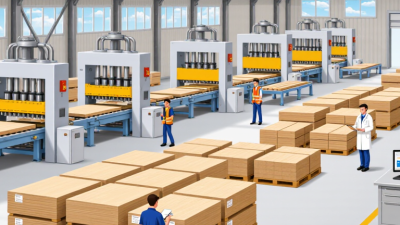
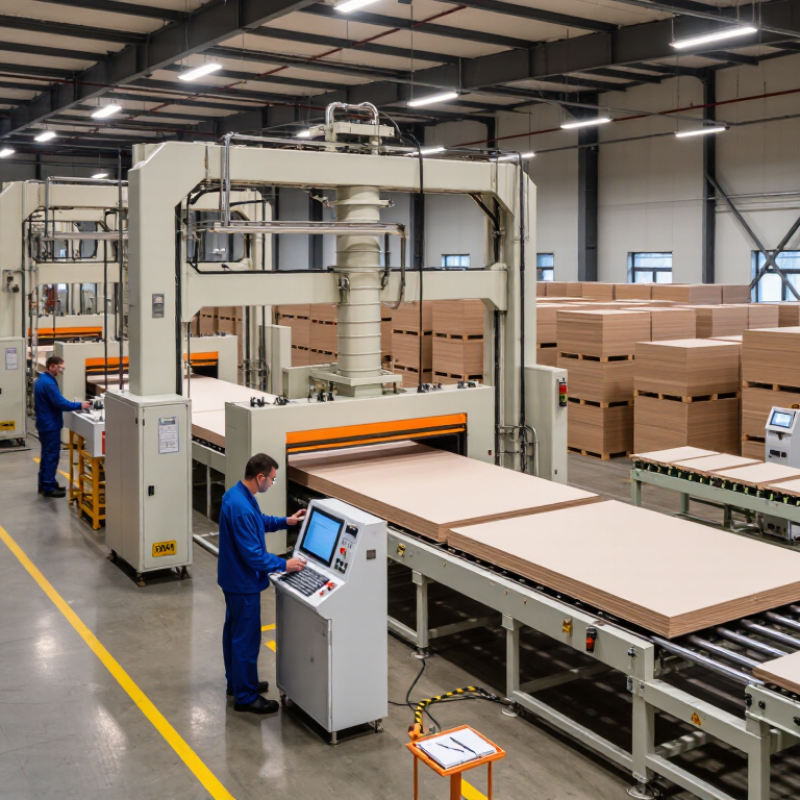
Request dated test reports for the exact OSB grade and thickness. EN 300:2006 sets OSB/3 minimum bending strengths of 20 N/mm² along the major axis and 10 N/mm² across it for panels 6–10 mm thick. Match those results to batch labels, and ask to review calibration logs and retained samples. If possible, walk the production line. Watch strand forming, resin blending, hot pressing, and thickness checks. A spotless showroom proves little. I would question an unusually perfect spreadsheet; real production varies. Ask how the factory records rejects and explains corrective actions.
Assess OSB Quality Standards, Testing, and Product Consistency
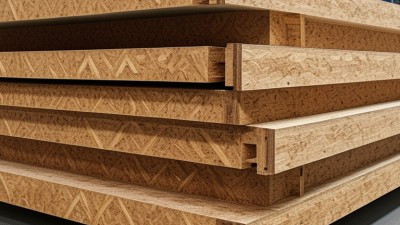
A reliable China OSB factory should provide evidence beyond a polished sample. Ask which product standard and test methods apply to your destination, panel grade, and intended use. Standard names alone prove little. Request recent laboratory reports covering properties such as thickness, moisture content, internal bond, bending strength, and thickness swelling. Check that the tested panel matches the product you plan to buy, including its thickness and grade. A report for a similar board is not proof. Look closely at cut edges too: uneven layers, loose strands, or swollen corners deserve questions.
Consistency is harder to judge from one visit. Request test records from several production lots, then compare results against the factory’s stated tolerances. Ask how operators monitor strand distribution, pressing conditions, and equipment calibration. These details affect whether boards stay uniform across a shipment. Very neat paperwork can still miss a weak batch. A factory visit is only a snapshot, so consider independent checks on randomly selected panels before shipment. Ask how the team handles out-of-range results and whether it keeps samples for comparison. No process is perfect; clear records and honest explanations matter more than confident promises.
How to Choose a Reliable China OSB Factory?
Assess OSB quality standards, testing, and product consistency against verifiable requirements—not supplier claims alone.
For EN 300 OSB/3 panels with thickness greater than 10 mm and up to 18 mm, the minimum bending strength is 18 N/mm² along the major axis and 9 N/mm² along the minor axis. Bending strength is assessed using EN 310. Also review internal bond strength (minimum 0.32 N/mm²) and 24-hour thickness swelling (maximum 15%) for this class and thickness range. Ask for traceable, batch-specific test reports and compare results across production lots to assess consistency. These are standard limits, not measurements from a particular factory.
Review Pricing, Lead Times, Shipping, and Export Experience
A reliable China OSB factory should explain its prices, production schedule, shipping plan, and export process clearly. Request a written quote that lists panel thickness, dimensions, grade, surface finish, packaging, and quantity. Compare like-for-like specifications; a lower price may exclude protective corner guards or other packing details. Ask which costs are included and which may change with order volume or shipping arrangements.
Tips: Request a production timeline with key milestones, not just a promised dispatch date. Ask how the factory handles delays and whether it can share recent, relevant export references. Check that sample panels match the quoted specifications.
Lead times can shift when raw materials, production queues, or port schedules change. Ask how many working days are needed for production and how much time is allowed for inspection and loading. For shipping, confirm the destination port, container plan, packaging method, and who arranges each stage. A factory experienced with exports should be able to describe its usual shipping documents and explain what information it needs from you. Verify details with your freight provider, too. One point is easy to miss: a neat schedule on paper does not guarantee smooth delivery. Compare the factory’s answers with actual sample records and shipment updates, then note any unclear promises before placing an order.
Confirm Samples, Communication, and Contract Terms
A reliable OSB factory should let you judge the product before discussing price. Request samples from the intended production line, not a specially prepared showroom piece. Check thickness at several points, square edges, surface consistency, and whether corners crumble during handling. Keep a labeled sample for comparison with the first shipment. Small details matter. ASTM D1037 provides established methods for evaluating properties of wood-based fiber and particle panels; ask which relevant tests support the factory’s claims.
Communication reveals how problems may be handled later. Send one clear specification sheet covering panel dimensions, thickness tolerance, bonding requirements, moisture expectations, and packaging. Ask the factory to confirm each item in writing. A vague answer about “standard quality” is not enough. The FAO Yearbook of Forest Products 2022 records global OSB production at roughly 42 million cubic metres, showing this is a large, established panel category—not proof that any individual supplier can meet your needs. I would not treat production scale as a quality guarantee.
Put sample approval and measurable specifications into the contract. Define inspection timing, acceptable tolerances, labeling, packing, delivery dates, and remedies for rejected panels. Confirm who pays for independent testing if results disagree. A scanned contract can look complete while leaving key tolerances undefined; that is easy to miss. Record agreed changes by email, and make sure the final document matches the sample and purchase order. One awkward conversation before production is cheaper than arguing over a container of panels afterward.