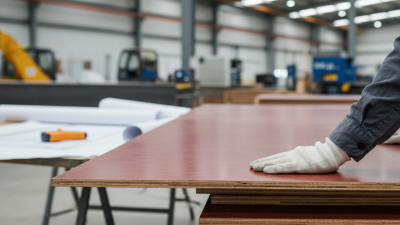
Which Phenolic Plywood Is Best for Construction in 2026? The answer depends on where the panel will be used, how often it will face moisture, and what finish the job requires. A smooth, dark film may look durable, but appearance alone cannot confirm bond quality or suitability for repeated use.
Phenolic Plywood is commonly selected for formwork, flooring, and other demanding applications because its resin-treated surface can resist moisture and wear. Yet panels vary. Core species, thickness, edge sealing, film weight, and manufacturing quality all affect performance. On a site, the difference can show up as chipped corners, swollen edges, or a concrete finish that needs extra repair. Small details matter.
This guide compares practical selection factors for 2026, including application, expected reuse, surface quality, and documentation. It also highlights checks buyers can make before ordering: confirm the panel grade, inspect edges, and request technical data from the supplier. Choose for the exposure, not the label. A cheaper sheet may be the wrong economy if it fails early.
No source-backed quotation or named expert statement was provided with the brief, so this introduction does not invent one. For a published version, add a verified quotation from a named plywood specialist and cite its original source. That extra step strengthens trust—and prevents an attractive claim from outrunning the evidence.
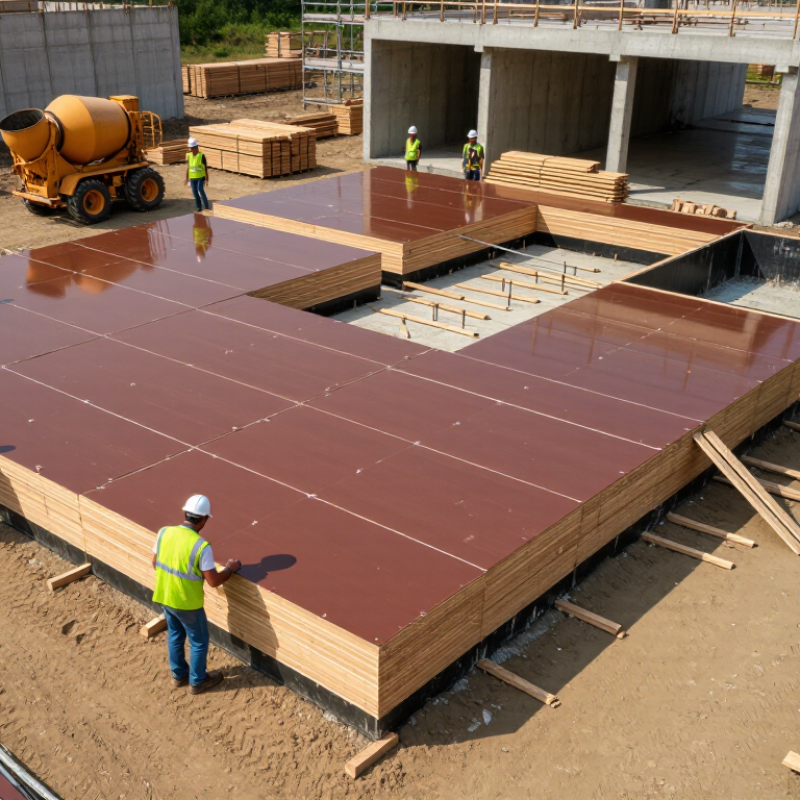
Phenolic plywood is made from thin wood veneers bonded with phenol-formaldehyde resin, a heat-curing adhesive. Veneer layers are stacked with their grain directions alternating, then pressed under heat and pressure. This cross-layered structure helps the panel resist splitting and remain dimensionally stable. In film-faced products, a resin-treated paper film is also pressed onto the surface, creating a smoother, more moisture-resistant face. The USDA Forest Products Laboratory’s Wood Handbook describes phenolic adhesives as durable under demanding moisture conditions. Still, the panel’s core, edge sealing, and workmanship matter too.
The European Panel Federation’s 2024 annual report puts European wood-based-panel production in 2023 at roughly 56 million m³. That figure covers many panel types, not phenolic plywood alone; it shows the scale of the wider industry, not a guarantee of performance. That distinction matters. Construction buyers should check the panel’s declared grade and intended use rather than relying on “phenolic” as a complete specification.
Tips: Look closely at a cut edge. Veneer gaps, chipped corners, or exposed core layers can invite moisture and shorten service life. Keep edges sealed. A small site cut can become a weak point if left unprotected.

For construction in 2026, phenolic plywood should be judged against the conditions it will actually face. A formwork panel needs a durable film surface, reliable bonding, and enough stiffness to hold its shape under wet concrete. Start with the job. Repeated pours demand different wear resistance from a one-time, sheltered application. Check the panel’s thickness, core construction, and stated bond class rather than relying on a glossy face alone.
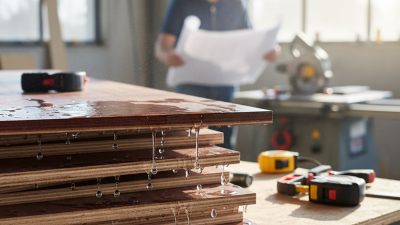
Moisture performance matters, but “water-resistant” does not mean waterproof. Inspect cut edges for open gaps, and seal them where the project specification requires it. A sound panel should have an even surface, tight veneer layers, and no obvious bulges or delamination. Small core voids can become weak spots after repeated fastening. Ask for current technical data and traceable test information; vague claims make comparison difficult.
The best choice also depends on handling and site practice. Heavier sheets can be awkward to move, while thinner panels may deflect between supports. Confirm allowable spans with the supplier’s engineering data and the project designer, especially for high-pressure pours. Check emissions documentation and local project requirements before purchase. Then inspect a sample under real cutting and release conditions. It may show a flaw. That is useful information, not a reason to ignore the specification.
Choosing phenolic plywood for construction in 2026 starts with the job, not the label. Face grades describe surface quality, not the panel’s full structural performance. Check the stated grade, thickness tolerance, and relevant test documents. For concrete formwork, a smooth film face can help produce a cleaner finish. Repeated pours also depend on film durability and well-sealed edges. Small details count. I still check the panel edges by hand; paperwork cannot show every chip or gap.
Core construction affects stiffness, weight, and consistency. Hardwood cores are often dense and strong, while softwood cores can reduce weight. Mixed cores balance properties, but quality varies between manufacturers. Look for an even core with few visible voids, especially where panels will carry loads or be cut. Surface options matter, too: smooth film suits many formwork tasks, while textured finishes can improve grip on platforms. A textured face is not automatically safe in every wet or dusty setting. That distinction is easy to overlook.
Tips: Match thickness and span to the project specification, then inspect a sample before ordering. Check edge sealing after cutting, and confirm the intended use with technical data. A neat face is useful, but it is not proof of strength. I would not choose on appearance alone.
| Selection factor | Option or classification | Typical characteristics | Best suited to | What to check before buying |
|---|---|---|---|---|
| Bonding and exposure class | EN 314-2 Class 1 / EN 636-1 | Bonding and panel classification for dry conditions; not intended for prolonged exposure to moisture or weather. | Protected interior construction where the panel will remain dry. | Confirm that the project environment is genuinely dry. A phenolic film on the face does not, by itself, change the panel’s declared bonding or exposure class. |
| Bonding and exposure class | EN 314-2 Class 2 / EN 636-2 | Classified for humid conditions, such as protected applications where humidity or occasional moisture may occur. | Suitable protected construction uses when specified for humid conditions. | Check the product’s declared use and protect cut edges and holes as required. “Humid conditions” does not mean unrestricted outdoor exposure. |
| Bonding and exposure class | EN 314-2 Class 3 / EN 636-3 | Bonding and panel classification intended for exterior conditions. The panel still requires appropriate detailing and protection for its end use. | Construction applications where weather exposure is expected, subject to the project specification. | Verify the standard, declared performance, durability requirements, and edge-protection instructions on the product documentation. |
| Core construction | Birch veneer core | Typically dense and stiff, with a relatively uniform veneer construction; generally heavier than lighter-core alternatives at comparable dimensions. | Formwork and demanding panel uses where stiffness and a consistent panel build are priorities. | Compare declared structural properties, thickness, panel build, and weight. Core species alone does not establish a panel’s design capacity. |
| Core construction | Combi or mixed-hardwood core | Made with a combination of wood species or veneer types. Properties and internal construction can vary between products. | General construction and formwork where the documented performance meets the project requirements. | Check the manufacturer’s declared strength and stiffness values, veneer layout, bonding class, and permitted application. |
| Core construction | Poplar or other lightweight core | Often chosen to reduce panel weight. Stiffness, strength, and fastener performance depend on the panel’s full construction and specification. | Applications where easier handling is useful and the required structural performance is confirmed. | Do not assume that a lower-weight panel is interchangeable with a denser-core panel. Verify design values, support spacing, and fixing requirements. |
| Surface finish | Smooth phenolic film | A resin-treated film provides a smooth, sealed face designed for use and cleaning appropriate to the product specification. | Concrete formwork and other applications that call for a smooth panel face. | Check film condition, face quality, edge sealing, and the supplier’s guidance on release agents and cleaning. Reuse depends on handling and site conditions. |
| Surface finish | Textured or mesh phenolic film | Embossed surface intended to provide more grip than a smooth face; texture and slip performance vary by product. | Flooring, walkways, vehicle decks, or other applications where a textured face is specified. | Confirm the required slip-resistance performance using suitable test documentation. Texture alone is not a certified slip rating. |
| Overall choice | Best match for the project | There is no universally best phenolic plywood: exposure class, structural performance, core, thickness, surface, and edge treatment all matter. | Choose the panel that meets the project specification, site conditions, and intended service life. | Request product documentation showing applicable standards, declared properties, intended use, and installation guidance; confirm requirements with the project designer. |
| Important note | “Phenolic plywood” commonly describes plywood faced with phenolic resin-impregnated film, but product constructions and ratings vary. Surface film should not be treated as proof of exterior durability, structural capacity, or a particular number of concrete-formwork reuses. | |||
Which Phenolic Plywood Is Best for Construction in 2026?
Choosing Phenolic Plywood for Different Building Applications
The best panel depends on what it must do: carry loads, resist wet concrete, or provide a durable surface. For concrete formwork, choose structural plywood with a sound phenolic film and sealed edges. Check the maker’s stated reuse conditions, too. Film alone does not prevent water entering through damaged corners or cut edges. A small chip can leave a visible mark in the next pour.
For floors and roofs, prioritize structural grade, thickness, and support spacing over a glossy finish. APA’s Engineered Wood Construction Guide explains span ratings such as 24/16: the first number indicates roof support spacing, and the second indicates floor spacing, in inches. Match the rating to the design and verify local project requirements. A panel made for formwork is not automatically suitable as a structural floor.
Moisture deserves attention. The USDA Forest Products Laboratory’s 2021 Wood Handbook reports an equilibrium moisture content of about 9.2% at 70°F and 50% relative humidity. Site conditions can differ, so protect panels from standing water and allow them to acclimate before installation. This detail is easy to overlook. For exterior walls or humid interiors, confirm the panel’s bond classification and protect exposed edges; phenolic film is not a substitute for sound drainage or installation practice.
Common nominal plywood thickness options (mm). Availability varies by panel and supplier; thickness alone does not determine suitability.
Choosing for the application: thinner panels may suit lighter-duty linings, while thicker panels are often considered for formwork or flooring. Confirm the required thickness against loads, support spacing, panel construction, and the manufacturer's technical data. For moisture exposure, check the panel’s declared service class and protect edges; a phenolic film face alone does not establish structural suitability.
For construction in 2026, choose phenolic plywood by its declared use, not by a dark, glossy film. A smooth face can resist moisture and concrete adhesion, but it does not prove structural capacity. Check the panel’s thickness, grade, permitted load, and support spacing against the project design. Where applicable, review construction product documentation and relevant standards, such as EN 13986, EN 636, and EN 314-2. Requirements vary by market, so confirm local building rules. A certificate alone may not answer whether a panel suits repeated formwork or a floor.
Installation affects performance. Support sheets evenly, follow the manufacturer’s fixing guidance, and avoid forcing screws close to an edge. Seal cut edges with a compatible coating; exposed cores can take up water and swell. Inspect panels for delamination, crushed corners, or film damage before use. Use dust extraction and suitable respiratory protection when cutting, and follow the site’s handling and safety procedures. A glossy face proves little. It is easy to overlook the edges when a sheet looks sound from above.
Tips: Check the load table before setting joist spacing. Store sheets flat, raised off wet ground, with edges protected. Confirm that the face is suitable for the intended use; smooth film is not automatically slip-resistant. Keep the product paperwork with the delivery, and photograph any damaged sheets before installation. I would not assume one panel specification fits every job.