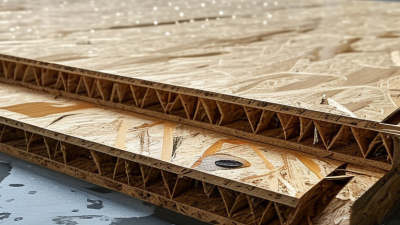
Global buyers need more than a supplier’s “waterproof” claim when selecting OSB panels. The phrase Osb Board Waterproof often describes improved moisture resistance, not permanent protection from rain, flooding, or standing water. EN 300 classifies OSB/3 and OSB/4 for humid conditions, while APA guidance separates Exposure 1 panels from fully exterior-rated products. These classifications matter on a wet construction site.
The USDA Forest Products Laboratory’s Wood Handbook explains that wood-based panels gain moisture, swell, and lose dimensional stability when exposed repeatedly to water. APA technical guidance also stresses correct panel grades, edge sealing, drainage, and installation details. A strong board still needs protection. Small gaps matter.
For international projects, buyers should compare OSB/3, OSB/4, Exposure 1, and Exterior specifications rather than relying on translated marketing terms. Check thickness tolerance, density, bending strength, formaldehyde class, tongue-and-groove accuracy, and third-party test certificates. EN 13986 can support conformity assessment for wood-based panels used in construction across European markets. However, certificates do not replace site judgment. A panel stacked directly on wet concrete can fail before installation.
The best choice depends on climate, transport exposure, wall or roof design, and expected service conditions. In coastal warehouses, sealed edges and raised pallets can be as important as resin technology. Buyers should request batch-level documentation, not only a company brochure. Some product labels remain unclear. That is worth questioning. This guide compares leading waterproof OSB board types, their technical limits, and practical selection points for global procurement.
Top Waterproof OSB Board Types for Global Buyers?
OSB/3: Moisture-Resistant Boards for General Construction
OSB/3 is designed for load-bearing use in humid conditions, making it practical for walls, roofs, floors, and site partitions. It handles occasional moisture better than standard interior-grade OSB. However, it is not waterproof. That distinction matters.
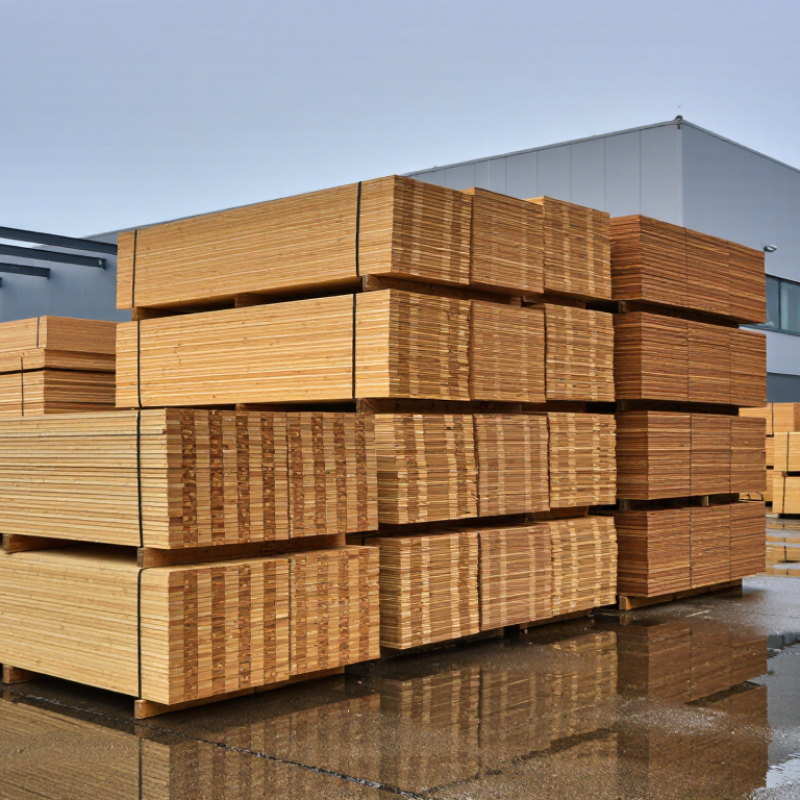
During construction, panels may face rain, condensation, or damp storage areas. OSB/3 can tolerate short exposure when edges remain protected and ventilation is available. Keep sheets flat, raised from the ground, and covered with breathable material. Trapped moisture can cause swelling.
Small details matter.
Installers should leave expansion gaps around panel edges, especially in changing climates. Sealing exposed edges can reduce water absorption, but it cannot replace proper flashing, membranes, or roof coverings. Fasteners should be selected for the building environment, since corrosion can weaken a sound panel over time.
For global buyers, check the declared performance standard, thickness tolerance, formaldehyde class, and moisture-related documentation. EN 300 classification is useful, but local building rules may require additional testing or certification. A supplier’s technical datasheet should identify the intended structural use clearly.
The board is reliable when used within its limits. It is not a perfect answer for permanently wet locations. In practice, poor storage often creates more damage than normal weather exposure. A careful inspection should check swollen edges, delamination, and uneven surfaces before installation.
Minimum bending strength by board thickness class according to EN 300. OSB/3 is designed for load-bearing use in humid conditions, but it is not fully waterproof.
The major-axis bending strength is higher than the minor-axis value because the strands are preferentially oriented during production. Thicker OSB/3 panels have lower minimum strength requirements under the EN 300 classification, so buyers should select thickness and grade according to the structural design and service environment.
OSB/4: High-Strength Boards for Heavy-Duty Structural Applications
OSB/4 is designed for demanding structural work where ordinary OSB may flex or weaken. Its dense, cross-oriented strands provide strong bending resistance and reliable load transfer. In practice, it suits roof panels, flooring, wall sheathing, and industrial partitions. A 22 mm panel feels substantial underfoot, especially when joists are correctly spaced.
However, “waterproof” can be misleading. OSB/4 offers improved moisture resistance, not unlimited protection from rain or standing water. Unsealed edges may swell after repeated wetting. I have seen excellent panels fail because storage was careless. Keep boards flat, raised from the ground, and covered with breathable protection. Allow suitable expansion gaps during installation.
Tips: Check the declared thickness, density, panel grading, and test documents before purchase. Inspect edges for crushing, loose strands, or uneven pressing. Confirm that the intended application matches local structural requirements. Sealing exposed cuts can reduce moisture entry, but it cannot replace proper drainage and ventilation. One detail is easy to miss: panels should acclimatize near the installation area before fitting. Small oversights can become expensive repairs.
Top Waterproof OSB Board Types for Global Buyers?
Tongue-and-groove OSB creates tighter joints for flooring and roof decking. Its interlocking edges reduce movement between panels. They also help prevent raised seams under flooring or roofing membranes. For demanding environments, buyers often specify OSB/3 or OSB/4 under EN 300. These grades support humid service conditions, but they are not permanently waterproof.
The FAO Global Forest Products Facts and Figures 2023 report placed global wood-based panel production at about 400 million cubic metres. This scale reflects strong demand for engineered panels across construction markets. However, product selection still requires local testing. Look for thickness, bending strength, formaldehyde class, and edge swelling data. A 22 mm tongue-and-groove panel feels solid underfoot, but exposed edges can still absorb rain quickly. That detail is easy to underestimate.
Tips: Leave an 8 mm expansion gap around floor edges, following the installation specification. Keep panels flat, raised from the ground, and covered during storage. Seal cut edges before installation. For roofing, install a breathable underlay and temporary weather protection. USDA Forest Products Laboratory guidance confirms that moisture changes affect wood-based panel dimensions. I would not describe any OSB as “fully waterproof” without project-specific testing. That wording is tempting, but technically careless.
Top Waterproof OSB Board Types for Global Buyers?
Fire-retardant OSB contains additives that slow flame spread through the panel. It does not make the board non-combustible. Buyers should request tested fire classifications, smoke data, and production-batch records before ordering. Local building rules may require different performance levels. A certificate alone is not enough if it lacks thickness, density, or installation details.
Coated OSB uses a protective surface layer to reduce moisture uptake and improve surface resistance. Common applications include wall sheathing, temporary structures, roof components, and humid interior spaces. Edges remain vulnerable. They need proper sealing, especially around cutouts and fasteners. Coating compatibility also matters because some adhesives or sealants can weaken the surface.
Details matter.
During inspection, check flatness, edge swelling, coating uniformity, and damaged corners. Store panels raised from the ground, covered, and ventilated. “Waterproof” can be an imprecise trade term; many OSB products resist water but cannot tolerate permanent exposure. A coated panel may still fail when water enters through unsealed joints. Buyers should compare independent test reports, technical datasheets, and installation guidance rather than relying on marketing language. In practice, choosing the strongest fire rating can be unnecessary if the surrounding assembly performs poorly. That point is easy to overlook.
Top Waterproof OSB Board Types for Global Buyers?
Global buyers should compare performance, not just the word “waterproof.” No OSB panel is permanently waterproof. Its suitability depends on moisture exposure, edge protection, and installation quality. EN 300 classifies OSB/3 for humid conditions and OSB/4 for heavier structural loads. Reported minimum bending strength is about 18 N/mm² for OSB/3 and 26 N/mm² for OSB/4 on the major axis. Values vary with thickness. Check the technical sheet carefully.
The USDA Forest Products Laboratory’s Wood Handbook, 2021, explains that wood panels expand when moisture content rises. That matters during ocean transport, where condensation can wet pallet edges and corners. Buyers should compare 24-hour thickness swelling, resin performance, density, and formaldehyde class. Under EN 300, typical maximum swelling limits are approximately 15% for OSB/3 and 12% for OSB/4. The FAO Global Forest Products Facts and Figures 2023 report places global wood-based panel production above 350 million cubic metres annually, showing the scale of international sourcing. Yet, large supply does not guarantee consistent quality.
Tips: Request certificates, recent test reports, and samples from the same production line. Inspect tongue-and-groove edges, sealed sides, and packaging before shipment. Ask whether the panel is rated for temporary exposure or continuous exterior use. Do not accept “waterproof” without a standard reference. A small mistake here becomes expensive later.
| OSB Type | Relevant Standard / Classification | Moisture Performance | Typical Structural Use | Common Thickness Range | Suitable Exposure | Buyer Evaluation Points |
|---|---|---|---|---|---|---|
| OSB/3 | EN 300; load-bearing board for use in humid conditions | Moisture-resistant, but not permanently waterproof; performance depends on edge sealing, detailing, and protection | Wall, roof, and floor sheathing in residential and light commercial construction | Typically about 8–25 mm, subject to manufacturer and project specification | Interior humid conditions and temporary, protected construction exposure | Check thickness swelling, panel straightness, edge profile, declared mechanical properties, and compliance documentation |
| OSB/4 | EN 300; high-load-bearing board for use in humid conditions | Higher structural capacity than OSB/3, with improved resistance requirements for humid service; still not a permanent waterproofing layer | Heavy-duty roof, floor, wall, and engineered timber applications | Typically about 8–25 mm, with thicker panels available for specific applications | Humid service where higher strength and stiffness are required | Compare design values, density, screw-holding performance, thickness swelling, and project-specific load calculations |
| Exposure 1 OSB | Common North American panel designation under performance-based sheathing standards | Designed to withstand construction-period moisture, including normal weather exposure before enclosure; not intended for permanent exterior exposure | Roof decking, wall sheathing, subflooring, and other structural sheathing applications | Commonly supplied in nominal 7/16 in, 15/32 in, 19/32 in, and 23/32 in sizes, depending on the application | Temporary weather exposure during construction, followed by protection within the building envelope | Verify span rating, panel grade stamp, thickness, allowable design values, and local code acceptance |
| Exterior-Bonded OSB | A product description referring to adhesive durability and intended exposure; the exact governing standard must be confirmed | Better suited to repeated humidity or outdoor conditions than standard interior-bonded panels, but the board is not automatically a waterproof membrane | Protected exterior sheathing, fascia, site structures, transport packaging, and moisture-prone areas when properly detailed | Often available from approximately 6–30 mm, depending on the product specification | Outdoor or semi-exposed applications only when the declared product rating permits them | Request the applicable standard, exterior-use statement, edge-sealing requirements, coating compatibility, and durability test results |
| Tongue-and-Groove OSB Subfloor Panel | A machined-edge configuration; structural grade and moisture classification must be checked separately | Usually moisture-resistant when manufactured for subfloor use; tongue-and-groove edges improve fit but do not create a waterproof joint | Floor decking and subfloor systems where reduced edge movement and improved load transfer are useful | Commonly about 18–23 mm for structural floor applications, subject to span and code requirements | Protected construction exposure; permanent wetting requires a separately designed system | Compare span rating, groove geometry, moisture content, thickness swelling, fastening schedule, and installation tolerances |
| Film-Faced or Coated OSB | A surface-finished product category; coating performance and structural classification must be verified independently | The film or coating can reduce surface water absorption and improve cleanability, but damaged faces and unsealed edges may still absorb water | Reusable formwork, temporary protection, transport flooring, and selected exterior or industrial applications | Frequently supplied in approximately 9–25 mm, depending on the intended use | Short-term or controlled outdoor exposure, subject to the coating and edge-protection specification | Check coating weight, surface wear resistance, slip resistance, edge treatment, reuse rating, and repair requirements |