Inquiry
Form loading...

Is OSB Board Waterproof China Best Buying Guide?

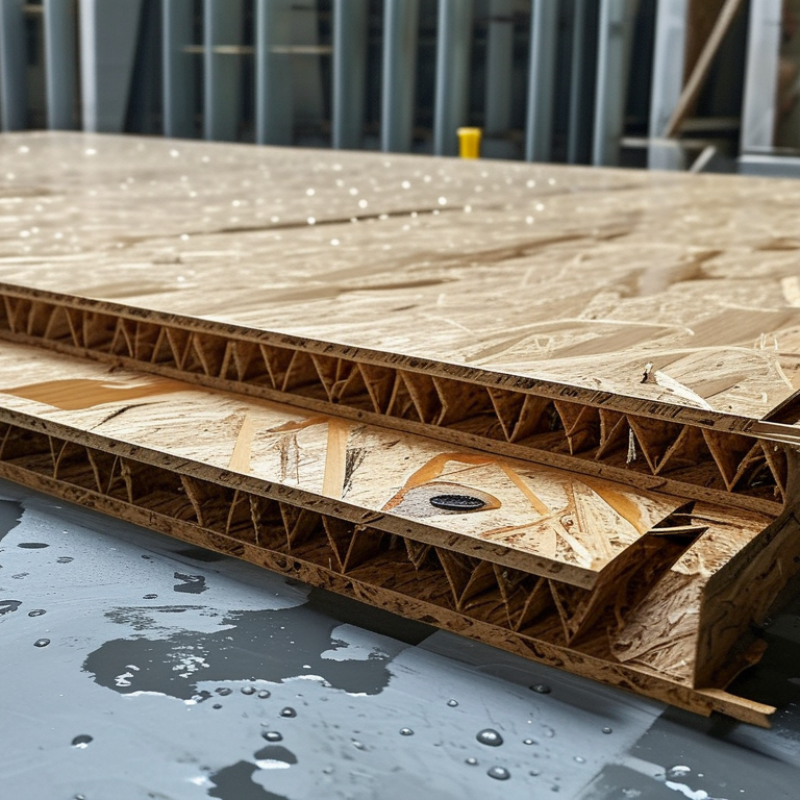
Is Osb Board Waterproof China Best Buying Guide? This question sounds simple, but the answer depends on exposure, edge protection, resin quality, and installation details. OSB is engineered wood, not solid plastic. Even panels labeled moisture-resistant can swell when water reaches unsealed edges or damaged surfaces.

Dr. Robert H. Falk, a respected wood-products researcher, once stated, “OSB is engineered to manage moisture, not to ignore it.” That warning deserves attention. A panel may survive short exposure during construction, yet fail after repeated rain, standing water, or poor ventilation. The difference can appear as a raised corner, a rough edge, or a soft-looking surface beside a leaking window.

This guide examines Osb Board Waterproof products supplied from China through practical buying criteria. It considers panel grade, thickness, adhesive performance, formaldehyde documentation, surface treatment, dimensional stability, and factory quality control. It also explains the difference between waterproof, water-resistant, and temporary weather protection. These terms are often used loosely.

Real experience matters here. Ask for technical data, production samples, test reports, and clear packaging photographs. Check whether the supplier identifies EN, ISO, or other applicable standards. Do not trust a glossy label alone.

Some choices remain uncertain. A lower price may reflect efficient production, or weaker protection. A thicker board may perform better, but not in every wall or flooring design. Correct installation still matters. This guide helps buyers compare evidence, identify hidden risks, and choose an Osb Board Waterproof solution with realistic expectations.
Is OSB Board Waterproof China Best Buying Guide?

What Does “Waterproof” Mean for OSB Board? EN 300 Classes Explained

Is OSB Board Waterproof China Best Buying Guide?

“Waterproof” is not an EN 300 classification. The standard separates OSB by load capacity and moisture conditions. OSB/1 and OSB/2 are intended for dry interior environments. OSB/3 and OSB/4 are designed for load-bearing use in humid conditions. They tolerate occasional moisture, but they are not permanently waterproof.

EN 300 specifies maximum thickness swelling after 24 hours of water immersion. The limits are:

25% OSB/1 20% OSB/2 15% OSB/3 12% OSB/4

These figures are useful buying evidence, not promises of outdoor durability. The USDA Forest Products Laboratory’s Wood Handbook also explains that repeated moisture changes cause swelling, shrinkage, and lower dimensional stability in wood panels. The weak point is often the edge. A perfect-looking surface can still fail after unprotected water exposure. I would question any supplier using “waterproof” without test conditions.

Tips: Ask Chinese suppliers for the EN 300 class, 24-hour thickness-swelling result, panel density, and recent laboratory report. Check whether the report matches the supplied thickness and production batch. Protect cut edges with a suitable sealant, and provide drainage behind exterior panels. Avoid treating OSB/3 as a substitute for a fully waterproof construction system.
OSB/3 vs OSB/4: Moisture Resistance and 24-Hour Swelling Data

OSB is not automatically waterproof, even when its surface looks dense and smooth. OSB/3 is designed for humid service conditions, while OSB/4 offers higher strength and improved moisture resistance. Under EN 300 testing, OSB/3 typically allows up to 15% thickness swelling after 24 hours of water immersion. OSB/4 commonly allows up to 12%. These figures are maximum limits, not guaranteed site results.

The test is severe and easy to misunderstand. A panel is immersed for 24 hours, then measured across its thickness. Real construction exposure may involve rain, condensation, or repeated wetting and drying. These conditions can damage edges differently. An 18 mm OSB/3 sheet may swell noticeably around an unsealed cut edge, even when its main face remains stable. OSB/4 may perform better, but it still needs protection.

Check the technical sheet.

For Chinese purchasing, request the current test report, declared thickness swelling, density, and production batch details. Inspect samples after soaking, especially along tongue-and-groove joints and cut edges. A lower swelling percentage is valuable, but it does not replace membranes, flashing, or edge sealing. One weakness remains: laboratory data cannot predict every installation mistake. A good panel can still fail when water stays trapped beneath it.

Is OSB Board Waterproof China Best Buying Guide? - OSB/3 vs OSB/4: Moisture Resistance and 24-Hour Swelling Data

Technical comparison based on EN 300 performance classifications and commonly specified moisture-resistant applications

Comparison Dimension OSB/3 OSB/4 Buying Interpretation
EN 300 Board Classification Load-bearing board for use in humid conditions. Heavy-duty load-bearing board for use in humid conditions. Both grades are designed for humid service, but neither grade is classified as waterproof.
24-Hour Thickness Swelling Limit ≤ 15% after 24 hours of water immersion, according to EN 300. ≤ 12% after 24 hours of water immersion, according to EN 300. OSB/4 has the tighter standardized swelling limit and generally offers better dimensional stability under short-term wet exposure.
Test Condition Complete immersion in water for 24 hours, followed by measurement of thickness increase. Complete immersion in water for 24 hours, followed by measurement of thickness increase. The test is a laboratory comparison; it does not represent permanent outdoor exposure or continuous water contact.
Moisture Resistance Suitable for occasional or intermittent exposure to humid conditions when correctly installed and protected. Suitable for demanding load-bearing applications in humid conditions, with improved resistance to swelling compared with OSB/3. Select the grade according to moisture level, structural load, exposure duration, and the project’s installation details.
Waterproof Status Not waterproof. It can absorb water through cut edges, joints, fastener holes, and damaged surfaces. Not waterproof. Lower swelling does not make the panel permanently water-tight. Use a suitable weather-resistive barrier, membrane, flashing, sealant, and edge protection where water exposure is possible.
Typical Construction Uses Roof decking, wall sheathing, floor decking, and other structural applications in protected or intermittently humid environments. High-load floor systems, heavy-duty wall or roof sheathing, and structural applications requiring greater stiffness and moisture performance. OSB/4 is usually considered when higher structural demand or tighter swelling control justifies the additional material cost.
Edge and Surface Protection Protect exposed edges and seal penetrations; avoid leaving panels uncovered during prolonged rain. The same protection is required even though the 24-hour swelling limit is lower. Correct detailing often has a greater impact on service life than choosing a higher board grade alone.
Dimensional Stability After Wetting Standardized maximum thickness increase is 15%; actual results vary with thickness, manufacturing quality, exposure, and edge condition. Standardized maximum thickness increase is 12%; actual results vary with thickness, manufacturing quality, exposure, and edge condition. Request current third-party test reports or declarations of performance for the exact panel specification being purchased.
Best Choice for Short-Term Wet Exposure Acceptable where exposure is controlled, temporary, and followed by prompt drying. Preferred where reduced swelling and higher load-bearing performance are important. Neither panel should be treated as a permanent exterior finish or submerged construction material.
Key Purchasing Checks Confirm EN 300 grade, panel thickness, structural rating, moisture condition, formaldehyde class, dimensions, and edge profile. Confirm the same information, plus project-specific load requirements and evidence supporting the declared performance. Do not compare price alone; compare certified performance, tolerances, moisture protection, logistics, and installation requirements.

Important: “Moisture-resistant” does not mean “waterproof.” The 24-hour swelling limits are standardized EN 300 classification values for thickness increase after immersion. Always follow the panel manufacturer’s installation instructions and the applicable local building regulations.

China OSB Standards: EN 13986, E1 Emissions, and Quality Grades

OSB is not naturally waterproof. It is engineered for moisture resistance, not permanent water exposure. China buyers should separate EN 13986 from the OSB product grade. EN 13986 supports construction use, factory production control, and CE-related performance assessment in Europe. It does not automatically prove exterior durability.

The practical grade comes from EN 300. OSB/1 suits general dry-use purposes. OSB/2 supports load-bearing applications in dry conditions. OSB/3 handles load-bearing use in humid conditions. OSB/4 offers higher structural performance, but it still needs edge sealing and correct installation.

The FAO Global Forest Products Facts and Figures 2023 reports global wood-based panel production above 400 million cubic metres. This scale makes traceable testing essential, not optional.

Formaldehyde evidence needs equal attention. Under EN 717-1, E1 classification generally means emissions at or below 0.124 mg/m³ in the chamber test. China’s GB/T 39600-2021 also defines stricter emission classes, including E0 and ENF. Ask for the original laboratory report, test method, production date, and panel thickness. A supplier certificate alone is weak evidence.

In my experience, buyers often compare only the E1 label, while ignoring swelling after 24-hour water immersion. That is an imperfect shortcut. A better check combines thickness swelling data, bending strength, density, surface quality, and batch inspection. One overlooked detail remains important: exposed cut edges can absorb water quickly, even when the panel face looks sealed.

How to Compare Chinese OSB Suppliers by Density, Thickness, and Certification

Is OSB Board Waterproof China Best Buying Guide?

How to Compare Chinese OSB Suppliers by Density, Thickness, and Certification

When assessing whether OSB board is waterproof, start with evidence rather than sales language. Chinese suppliers may offer panels for humid interiors, roof sheathing, or temporary exterior exposure. These uses are not identical. No OSB is universally waterproof. Ask for nominal density, measured density, and intended service class. A practical range often falls near 550–700 kg/m³, but resin and pressing conditions affect performance. Density alone cannot prove water resistance.

Compare thickness with your actual loading and installation needs. Check 9, 11, 15, or 18 mm samples using a calibrated micrometer. Measure several points. Uneven edges, swollen corners, or rough surfaces deserve attention. Request thickness tolerance, bending strength, internal bond, and thickness-swell results after water immersion. A supplier sharing raw test data is easier to assess than one offering only a glossy brochure. Small samples may perform better than bulk production, so inspect a production batch when possible.

Certification should be verified, not simply listed. Request current reports from an ISO/IEC 17025-accredited laboratory, plus relevant EN 300 or EN 13986 results when required. Check formaldehyde class, moisture-resistance grade, factory procedures, and certification scope. FSC chain-of-custody evidence may support responsible sourcing. Confirm batch numbers and report dates. Paperwork can look convincing. It can still be incomplete. Ask for sealed samples, packaging photos, and a written replacement policy before placing a large order. Wet containers can damage compliant panels.

Best Buying Checklist: Applications, Edge Sealing, Pricing, and Delivery Terms

OSB board is not automatically waterproof. EN 300 classifies OSB/3 for load-bearing use in humid conditions, but not permanent water exposure. The USDA Forest Products Laboratory’s Wood Handbook reports that indoor wood products commonly stabilize near 8–14% moisture content. Outdoor storage can push panels far beyond that range. Choose the grade for the application, not only the lowest quotation.

For roofs, walls, and floors, check structural thickness, span tables, surface texture, and exposure rating. Protect every cut edge with a compatible sealant, especially around sinks, windows, and floor penetrations. Factory edges are usually more stable than freshly cut edges. Still, I would inspect both. Water often enters through one careless cut. Leave suitable expansion gaps, then cover the panels quickly with the specified weather barrier.

Compare pricing using the same thickness, grade, sheet size, quantity, and delivered location. Weekly mill-price data from Random Lengths can help separate material cost from freight and handling charges. Ask for moisture protection during transport, pallet condition, loading photos, and a written damage-claim procedure. Delivery terms matter: clarify whether the quote is ex-works, delivered, or unloaded at site. A cheaper offer may become expensive after waiting fees and replacement sheets. I have seen buyers ignore unloading access. That was a mistake. Ask for production lead time, dispatch date, transit estimate, and acceptable moisture evidence before payment.

Is OSB Board Waterproof? China Buying Guide

OSB is not fully waterproof. Under the EN 300 classification, OSB/1 and OSB/2 are intended for dry conditions, while OSB/3 and OSB/4 are designed for load-bearing use in humid conditions. Even moisture-resistant panels require edge sealing, suitable installation, and protection from prolonged water exposure. Before purchasing, confirm the panel class, thickness, edge-sealing method, unit price, minimum order quantity, packaging, lead time, and delivery terms.

Reference framework: EN 300 OSB performance classes. “Yes” indicates the intended classification or application, not waterproof certification.