2026 Best OSB Board Sheet Suppliers for Global Buyers?
Choosing the best Osb Board Sheet suppliers for 2026 requires more than comparing prices on a spreadsheet. Global buyers must examine panel strength, moisture resistance, formaldehyde emissions, certifications, and delivery reliability. A low quotation may hide inconsistent thickness, weak edge bonding, or poor packaging.
Dr. Robert H. Falk, a former researcher with the USDA Forest Products Laboratory, has emphasized, “The performance of wood panels depends on matching the product to the application and exposure conditions.” That principle remains highly practical. Construction-grade OSB used for wall sheathing faces different demands from flooring, roofing, or industrial packaging. Buyers should request technical data sheets, mill test reports, production photos, and recent shipment references. Small details matter. A damaged corner can affect an entire installation.
This guide evaluates leading Osb Board Sheet suppliers through a buyer-focused lens. It considers manufacturing capacity, EN 300 or PS 2 compliance, FSC or PEFC certification, surface quality, thickness tolerance, and moisture control. It also reviews container loading, pallet protection, port access, and after-sales communication. Experience shows that reliable suppliers answer difficult questions clearly. They do not promise everything.
No supplier is perfect. Even experienced exporters can face delays, seasonal resin changes, or documentation errors. Buyers should verify claims independently and test samples before placing large orders. The strongest choice may not be the cheapest factory. It is usually the supplier that delivers stable panels, traceable documentation, and honest communication across borders. Availability may also change during 2026, so this ranking should be treated as a practical starting point, not a permanent verdict.
What OSB Board Sheets Are and How They Are Manufactured
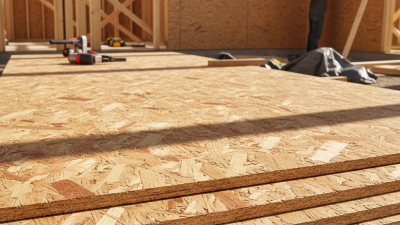
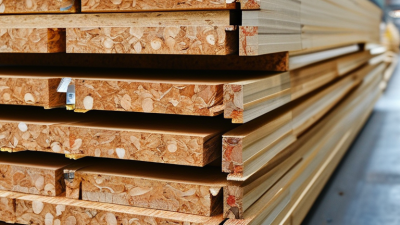
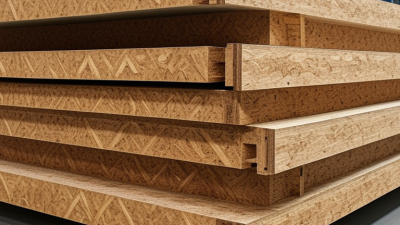
OSB board sheets are engineered wood panels made from thin strands, flakes, and small wood pieces. The strands are arranged in layers, with each layer facing a different direction. This cross-oriented structure improves strength, stiffness, and dimensional stability. OSB is widely used for wall sheathing, roof decking, flooring, and structural packaging. It is not the same as ordinary chipboard. Its strand alignment gives the panel more predictable load-bearing performance.
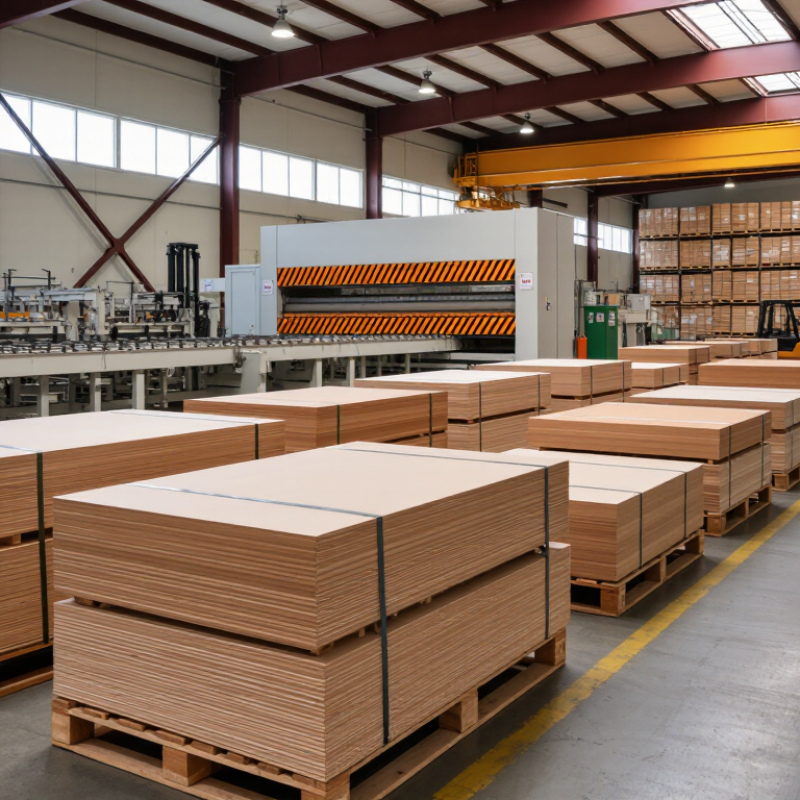
Manufacturing starts with debarked logs, usually from fast-growing trees. Machines cut the wood into controlled strands, which are then dried and blended with wax and resin. The strands move onto a forming line in carefully oriented layers. A hot press applies pressure and heat, curing the resin and bonding the structure. After pressing, large panels are cooled, trimmed, sanded, and tested for thickness, strength, moisture resistance, and formaldehyde emissions. In real purchasing work, panel quality can vary between production batches. That detail is easy to overlook.
Tips: Ask for technical data, emission reports, and thickness tolerances before ordering. Check edge swelling after moisture exposure. Store sheets flat, dry, and raised from the floor. Do not assume a higher grade solves every design problem. Local climate and installation quality matter.
How to Assess OSB Grades, Standards, and Applications
For global buyers, OSB assessment should begin with the panel’s intended use, not its advertised thickness. OSB/1 suits general-purpose work in dry conditions. OSB/2 supports structural loads in dry interiors. OSB/3 handles structural loads in humid conditions. OSB/4 offers higher performance for demanding structural applications. These grades are not interchangeable.
Check the applicable standard before comparing quotations. EN 300, PS 2, and other regional standards define different testing methods and performance classes. A compliant product should have traceable test reports, production-batch records, and clear marking on each panel or bundle. Ask about formaldehyde emissions, moisture resistance, thickness tolerance, density, and edge swelling. Small details matter. A low-cost sheet may fail during installation if its edges crumble around screws.
Application changes the buying criteria. Roof decking needs stable dimensions and reliable nail holding. Wall sheathing needs consistent strength and manageable weight. Flooring requires a firm surface, tight joints, and controlled thickness variation. Store sheets flat, raised from concrete, and protected from rain. I have seen buyers focus heavily on grade labels while ignoring transport humidity and warehouse conditions. That approach is incomplete. A sample inspection is useful, but one sample cannot represent every shipment. Verify independent testing, inspect several bundles, and compare results with the destination market’s current requirements. Suppliers should answer clearly, even when the answer is inconvenient.
2026 OSB Board Grade Comparison for Global Buyers
This chart compares selected EN 300 characteristic bending-strength reference values for OSB panels in the major and minor axis. OSB/1 is intended for general-purpose use in dry conditions, OSB/2 for load-bearing applications in dry conditions, OSB/3 for load-bearing applications in humid conditions, and OSB/4 for heavy-duty load-bearing applications in humid conditions.
Values are shown in N/mm² and represent nominal reference figures commonly used for 10–18 mm panels. Buyers should verify the current standard, panel thickness, axis direction, formaldehyde class, and moisture-performance requirements before specifying a product.
How Global Buyers Can Verify Suppliers and Product Quality
2026 Best OSB Board Sheet Suppliers for Global Buyers?
Global buyers should verify the factory, not only the trading company. Request a legal company record, production address, machinery list, and recent mill audit. Match the exporter’s name with the test report and shipping documents.
A useful warning: ISO’s 2022 Survey reported 1,265,216 ISO 9001 certificates worldwide, but certification alone does not prove OSB performance. It confirms a management system, not every delivered sheet.
Ask for batch-specific results from an ISO/IEC 17025 accredited laboratory. Check thickness, density, moisture content, internal bond strength, bending strength, and thickness swelling. Confirm the correct standard, such as EN 300 or ASTM D1037, for the destination market.
Formaldehyde emissions also need attention. Test values should match the declared class and applicable building rules. Randomly inspect pallet labels, edge sealing, surface uniformity, and damaged corners before loading. Photos help. They are not enough.
Sourcing records deserve equal scrutiny. The FAO Global Forest Resources Assessment 2020 states that forests cover about 31% of global land area. Buyers should request documented wood origin and valid chain-of-custody evidence when responsible sourcing claims are made.
Compare three production batches, not one attractive sample. I have seen clean samples hide uneven moisture control. That mistake is expensive.
A third-party pre-shipment inspection remains sensible, although it can still miss problems after loading. Suppliers should also explain complaint handling, replacement terms, and retained-sample procedures in writing.