Inquiry
Form loading...

China Best Building Plywood Suppliers for Global Buyers

China has become an important sourcing market for global construction buyers seeking reliable Building Plywood. Its factories offer varied veneer species, core structures, thicknesses, and surface finishes. Yet supplier selection requires more than comparing container prices. Buyers should examine veneer quality, panel flatness, bonding strength, formaldehyde emissions, packaging, and production consistency.

Wood scientist Robert H. Falk has emphasized, “Engineered wood performs best when its design matches the demands of its application.” This principle matters when selecting plywood for concrete formwork, roofing, flooring, wall sheathing, or furniture production. A 12-millimeter panel may look suitable, but its real performance depends on core gaps, veneer direction, glue quality, and moisture exposure. Small defects can become expensive problems at a construction site.

Look closely.

Reliable Chinese suppliers should provide clear technical data, sample panels, factory inspection records, and practical quality-control procedures. Buyers may request checks for thickness tolerance, bending strength, screw holding, water resistance, and surface damage after transport. Certifications can support confidence, but they should be verified against the actual product and shipment. A certificate alone proves little.

No supplier is flawless. Even experienced factories may face veneer shortages, changing timber sources, or uneven quality between batches. That weakness deserves honest discussion, not polished marketing. The strongest purchasing decision combines factory experience, independent testing, transparent communication, and realistic project requirements. This guide examines leading China Building Plywood suppliers through those practical standards, helping global buyers reduce uncertainty before placing a large order.
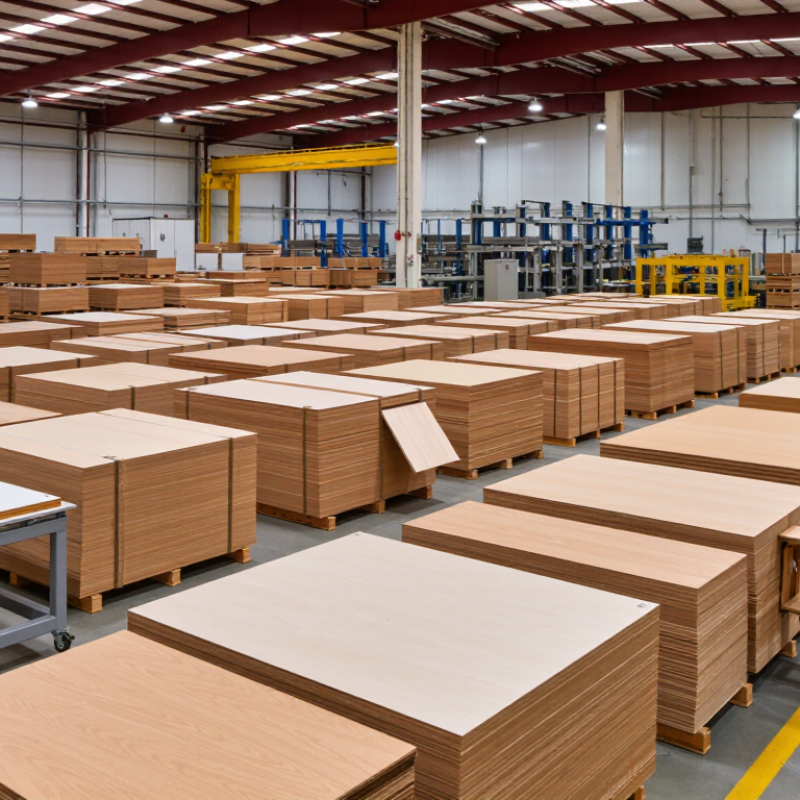
China Best Building Plywood Suppliers for Global Buyers

Building Plywood Grades: EN 636-1, EN 636-2, and EN 636-3 Explained

China Best Building Plywood Suppliers for Global Buyers

EN 636-1, EN 636-2, and EN 636-3 describe plywood for different moisture conditions. EN 636-1 is intended for dry interiors, such as furniture, wall lining, and protected flooring. EN 636-2 suits humid conditions, including kitchens, bathrooms, and sheltered construction areas. EN 636-3 is designed for exterior exposure, where rain and repeated humidity changes are expected.

Moisture changes everything. EN 636-2 and EN 636-3 require more reliable bonding performance than dry-service plywood. Buyers should also check EN 314 bonding class, formaldehyde documentation, thickness tolerance, and face quality. A dry-room label is not a weatherproof promise. That mistake remains common.

The FAO 2023 forest-products statistics place global wood-based panel production above 380 million cubic metres, confirming strong demand from construction and interior markets. The UNECE/FAO Forest Products Annual Market Review 2023–2024 also identifies construction as a major driver of panel consumption. For global buyers, supplier evaluation should include batch testing, moisture conditioning, and traceable factory records. Site experience shows that edge sealing, storage, and transport protection can affect performance as much as the panel grade. This is easy to underestimate. EN 636-3 may still fail when poor detailing allows water to remain around exposed edges. Category selection is important, but installation evidence deserves equal attention.

China Best Building Plywood Suppliers for Global Buyers - Building Plywood Grades: EN 636-1, EN 636-2, and EN 636-3 Explained

EN 636 Grade Service Environment Related EN 314-2 Bonding Class Moisture Exposure Typical Building Applications Suitable Installation Areas Key Purchasing Checks
EN 636-1 Dry conditions Class 1: dry conditions Interior use where the plywood is protected from persistent moisture, condensation, and weather exposure Interior wall and ceiling linings, furniture components, dry-area partitions, packaging, and general non-weather-exposed construction work Heated or normally dry indoor spaces, provided the product is not exposed to prolonged humidity or water Confirm panel thickness, face quality, formaldehyde class, dimensional tolerances, and whether the declared mechanical properties meet the project specification
EN 636-2 Humid conditions Class 2: humid conditions Intermittent exposure to moisture or high humidity; not intended for permanent outdoor weather exposure Protected structural components, roof and wall sheathing in sheltered locations, bathroom substructures, kitchen and utility-room components, and interior areas with occasional humidity Covered or protected construction zones where the panel can dry between periods of moisture exposure Check the manufacturer’s declared use conditions, edge sealing requirements, panel stability, screw-holding performance, and suitability for the planned structural or non-structural application
EN 636-3 Exterior conditions Class 3: exterior conditions Regular exposure to weather, moisture, and outdoor conditions, subject to suitable design, protection, and maintenance Exterior wall and roof components, outdoor structures, construction site applications, façade backing, transport equipment, and other weather-exposed uses Outdoor or exposed locations where the plywood is designed and installed to withstand the specified environmental conditions Verify the complete exterior specification, including surface durability, edge protection, preservative treatment where required, coating compatibility, fastener selection, and installation details
Important classification note: EN 636 identifies the plywood’s suitability for dry, humid, or exterior service conditions. It does not by itself define every structural property, durability requirement, fire performance characteristic, or formaldehyde emission class. Global buyers should request the product technical datasheet, declaration of performance where applicable, test reports, thickness and tolerance data, and project-specific compliance documents before purchase.

Core Quality Metrics: E1 Emissions ≤0.124 mg/m³ and ±0.5 mm Tolerance

China Best Building Plywood Suppliers for Global Buyers

For global buyers, core quality starts with measurable emission and dimensional controls. E1 plywood must meet a formaldehyde emission limit of 0.124 mg/m³ under the EN 717-1 chamber method. This figure is not a marketing phrase. It requires controlled testing, traceable production batches, and properly stored samples. The World Health Organization recommends 0.1 mg/m³ for indoor air over a 30-minute exposure, showing why small differences deserve attention.

±0.5 mm thickness tolerance is equally practical on construction sites. A panel that varies by 1 mm can create uneven flooring, visible joints, or extra leveling work. Suppliers should measure four corners and the center with a calibrated digital caliper. Testing at approximately 20°C and 65% relative humidity improves consistency. ASTM D1037 supports material testing practices, while EN 314-2 evaluates plywood bonding quality. Neither standard replaces a buyer’s dimensional inspection.

A certificate alone is not enough. We have seen clean paperwork paired with poorly protected edges and swollen sheets. That weakness deserves honest review. Buyers should request recent laboratory reports, production dates, core veneer details, moisture readings, and packing photos. Sampling one panel per container is also too weak for large orders. Random checks across bundles provide a more realistic view of E1 performance and ±0.5 mm tolerance. Small deviations may still appear, especially after long ocean transport.

China Supplier Manufacturing Capacity: 3–18 mm Panels and 1220×2440 mm Sizes

China remains a practical sourcing base for building plywood, especially when buyers need stable panel dimensions and flexible thickness options. Manufacturing capacity commonly covers 3–18 mm panels, supporting wall lining, roofing, furniture components, and concrete formwork. The standard 1220×2440 mm size fits many international cutting plans. It also helps reduce unnecessary trimming waste.

Experienced suppliers usually control veneer grading, core alignment, glue spreading, hot-press temperature, and sanding quality. Buyers should request thickness tolerance data, not only a product catalogue. A 3 mm panel may need different handling from an 18 mm structural sheet. Moisture content, surface smoothness, edge squareness, and bonding performance should be checked before shipment. Samples matter.

Small details affect jobsite results. Forklift entry points should be considered during pallet packing. Protective wrapping must resist rain during short outdoor handling. Export documents should match the actual grade, dimensions, and quantity. The number is useful, but not the whole story. A large factory may still produce uneven batches when production schedules become crowded. That risk deserves discussion.

Reliable communication includes clear drawings, inspection records, and agreed acceptance standards. Third-party inspection can verify thickness, size, appearance, and packaging before loading. Buyers should also confirm whether 1220×2440 mm is the finished size or a pre-sanding measurement. This difference can affect cutting plans. Careful sourcing turns broad capacity into usable plywood for global construction projects.

Buyer Due Diligence: ASTM D1037 Testing, FSC Certification, and Factory Audits

Choosing building plywood for global projects requires more than comparing thickness and price. Buyers should request recent laboratory reports and verify the tested product matches the shipment. ASTM D1037 can provide useful data on moisture resistance, thickness swelling, and strength for applicable wood-based panels. However, it is not a universal plywood approval. Ask the laboratory to explain the test scope, specimen conditioning, and acceptance criteria.

FSC certification deserves equal scrutiny. Check the certificate number, product scope, and chain-of-custody status through the official certification database. A factory may hold certification, yet a specific plywood grade may fall outside its approved scope. That detail is easy to miss. Factory audits should inspect veneer storage, glue mixing records, press temperature logs, and batch traceability. During one audit, a clean production line impressed us, but incomplete calibration records weakened confidence. Good appearances are not enough.

Tips: Request production samples from different batches. Measure thickness at several points, not only the edge. Compare the report date with the factory’s current equipment. Ask for corrective-action records after failed tests. Keep photographs, sample labels, and signed inspection notes together. Independent inspectors can reduce bias, though they cannot replace technical judgment. A careful buyer should also question unclear translations and unusually perfect test results. Mistakes happen. Unchecked assumptions cost more.

China Building Plywood Buyer Due Diligence Checklist

A practical verification framework for global buyers covering ASTM D1037-related testing, FSC Chain of Custody documentation, and factory audit controls. The values represent the number of verification points in this checklist, not supplier performance scores.

Buyers should confirm the applicable ASTM D1037 test methods with an independent laboratory, verify the FSC certificate scope and validity through the official FSC system, and document factory audit findings with objective evidence.

Global Procurement Standards: MOQ, Lead Times, Incoterms, and Container Loading Data

China Best Building Plywood Suppliers for Global Buyers

Global buyers should define purchasing data before requesting plywood quotations. A practical MOQ is one 20-foot container, although smaller trial orders may be possible. Specify thickness, grade, face quality, core material, moisture limits, and formaldehyde requirements. Lead times commonly range from 15 to 30 days after deposit and technical approval. Allow extra time for inspections. Small changes can delay production.

Incoterms must match your experience and risk tolerance. FOB gives buyers more control over ocean freight, while CIF simplifies initial transport budgeting. Confirm the named port, insurance scope, and document responsibilities in writing. Container loading data should include sheet dimensions, quantity, pallet count, cubic volume, and gross weight. For example, 18 mm panels measuring 1220 by 2440 mm occupy about 0.054 cubic meters each. A 20-foot container may carry around 500 sheets, depending on density and payload limits. Do not trust volume alone. Weight often becomes the real restriction. Ask for a final packing list, loading photos, and seal number before shipment. I have seen estimates fail when pallets were redesigned late. A written loading plan reduces that risk, but it cannot replace physical verification.