How to Choose a Reliable Plywood Factory?
Choosing a reliable Plywood Factory requires more than comparing prices and polished product photos. A dependable supplier should demonstrate consistent quality, clear communication, and traceable production practices. The strongest evaluation begins with the plywood itself. Check veneer thickness, core alignment, surface smoothness, and edge bonding. A fresh sample can reveal gaps, delamination, rough sanding, or uneven layers.
Ask how the factory controls moisture content and adhesive performance. These details affect stability during cutting, installation, and long-term use. Request current test reports, relevant certifications, and evidence of formal quality inspections. FSC or PEFC certification may support responsible sourcing, while emission testing helps confirm suitability for indoor applications. Certification alone is not enough. Verify its scope and validity.
A serious Plywood Factory should explain its raw material sources, production capacity, inspection process, and complaint procedure without hesitation. Factory videos are useful, but an on-site visit offers stronger evidence. Look for clean storage areas, labeled veneer stacks, calibrated testing equipment, and records that match actual production. Speak with previous customers when possible. Their experience may reveal delays or inconsistent batches that advertisements never mention.
Price still matters, but the cheapest quotation can become expensive after rejected panels, project delays, or replacement costs. No factory is flawless. Even reliable suppliers may face seasonal timber changes or shipping pressure. The important question is whether they identify problems early and correct them responsibly. A careful buyer should compare samples, documents, production records, and service responses before signing any order. Trust should be earned through evidence, not promised through confident language.
Define Plywood Grades, Thickness Tolerances, and Core-Veneer Standards
How to Choose a Reliable Plywood Factory?
A reliable plywood factory should explain its grading system before discussing price. Plywood grades describe face appearance, repairs, knots, and allowable defects. Names alone can mislead. Ask for the written grade definition. Compare an actual panel with that document under clear light. A clean face may hide open defects on the reverse.
Thickness tolerance must be measured, not promised. Use a calibrated caliper at several points, including corners and the center. An 18 mm panel should match the factory’s declared tolerance and applicable product standard. Do not accept “close enough” without records. Small variation can affect CNC cutting, cabinet joints, and stack height. Ask for inspection reports from production batches. Test recent samples, not only showroom pieces. One common inspection mistake is checking one sheet and missing uneven sanding across a full pallet. That mistake is expensive.
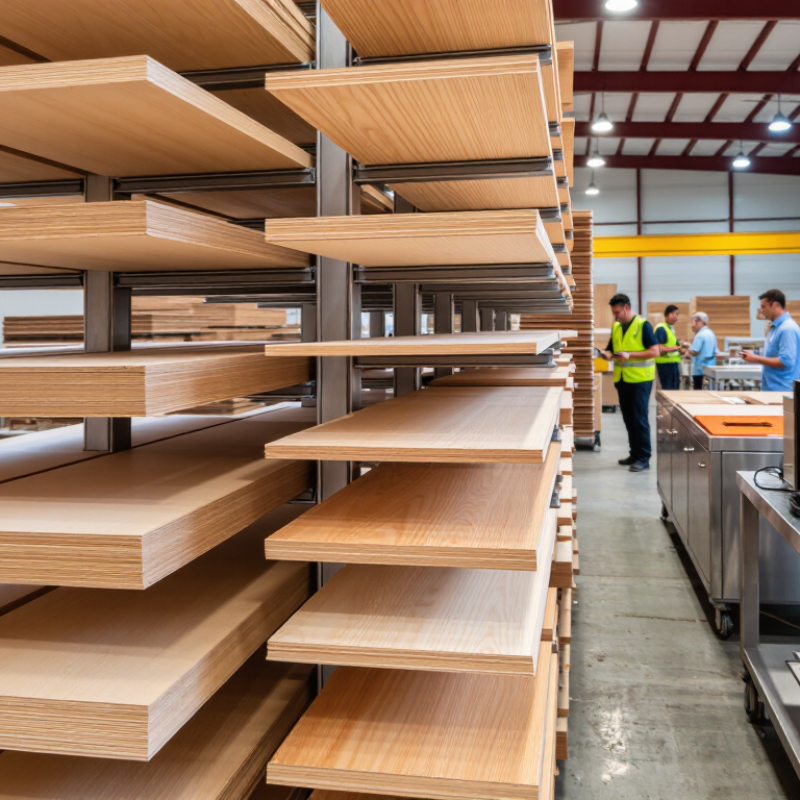
Core-veneer standards reveal more than surface appearance. Check veneer species, thickness, layer direction, joint quality, and internal gaps. Hold a cut edge to the light. Voids often appear as dark breaks between layers. For structural or moisture-exposed use, request bond-strength and moisture data. Factory staff should identify adhesive type, pressing conditions, and batch traceability. Their answers should be specific. If documents conflict, pause the order. A dependable supplier welcomes independent testing, although this step is sometimes skipped when schedules become tight. Recheck assumptions. Good plywood is consistent inside, not merely attractive outside.
How to Choose a Reliable Plywood Factory?
Compare the nominal thickness with the permissible thickness range referenced by EN 315. A reliable factory should identify the applicable standard, control thickness consistently, and provide inspection records for each production batch.
Plywood Grades
Under EN 636, Class 1 is intended for dry conditions, Class 2 for humid conditions, and Class 3 for exterior or severe moisture exposure. The selected class should match the final service environment.
Core-Veneer Standards
Quality plywood normally uses balanced veneer construction, alternating grain directions, controlled veneer moisture, and properly bonded core joints. Inspectors should check for core gaps, overlaps, delamination, and visible face defects.
Factory Verification
Confirm the product standard, nominal thickness, tolerance limits, adhesive class, veneer species, number of plies, and batch inspection method before placing an order.
Verify FSC Chain of Custody, ISO 9001, and EN 13986 Certifications
How to Choose a Reliable Plywood Factory?
Verify FSC Chain of Custody, ISO 9001, and EN 13986 Certifications
A reliable plywood factory should provide more than a certificate PDF. Verify the FSC Chain of Custody certificate number, scope, product groups, and expiry date. Confirm that the certificate covers the actual factory, not only a trading office. FSC’s 2024 Facts and Figures report more than 160 million hectares of certified forests worldwide. That scale shows strong market adoption, but certification does not guarantee every panel is perfect. Shipment records still need checking.
ISO 9001 indicates a documented quality management system. The ISO Survey 2023 recorded over 1.2 million ISO 9001 certificates globally. This figure shows wide use, not automatic factory excellence. Ask for inspection plans, corrective-action reports, calibration records, and batch traceability. A practical audit lesson is simple: clean paperwork cannot replace consistent production. Check veneer moisture, glue spread, pressing temperature, thickness tolerance, and surface defects during a factory visit.
Tips: Request a recent certificate copy and verify it through the issuing body. Ask for test reports from independent laboratories. For construction plywood, confirm EN 13986 suitability and the relevant declared performance. This standard addresses wood-based panels used in construction, including emissions and technical performance. Do not accept “EN 13986 certified” without details. The factory should identify the panel type, intended use, test method, and declaration documents. Some suppliers may confuse compliance with certification. That deserves a second look.
Check Formaldehyde Emissions Against TSCA Title VI’s 0.05 ppm Limit
How to Choose a Reliable Plywood Factory?
Formaldehyde control should begin with a clear number: 0.05 ppm. Under the U.S. EPA’s TSCA Title VI rule, this is the emission limit for hardwood plywood. A factory should provide current laboratory reports, not only a compliance statement. Ask for the test method, production batch, panel thickness, and test date. Without these details, the document proves very little.
During a practical factory audit, check how panels are stored before testing. Freshly pressed plywood can release more formaldehyde than conditioned material. EPA testing guidance requires controlled temperature, humidity, and chamber procedures. A reliable factory should explain these conditions clearly. It should also maintain calibrated equipment and traceable adhesive records. Small details matter.
Look for repeated results, not one perfect report. The Forest Products Laboratory notes that formaldehyde emissions can vary with resin content, wood moisture, temperature, and ventilation. A factory reporting only its lowest result deserves careful questioning. Request recent results from different batches and compare them with the 0.05 ppm limit. I would also inspect production labels and sampling records. This step is easy to overlook. It should not be. Even a technically compliant factory may need tighter storage controls during hot, humid shipping seasons.
Audit Veneer Moisture, EN 314-2 Bond Classes, and Press Controls
How to Choose a Reliable Plywood Factory?
A reliable plywood factory should show veneer moisture records, not only attractive samples. Before pressing, veneer moisture commonly needs tight control, often around 6–12%, depending on species and panel design. Excess moisture can create steam blisters, weak cores, and uneven thickness. Ask for calibrated meter records, sampling frequency, and storage conditions. Veneer stacks should be covered, raised from concrete, and protected from sudden humidity changes. Small details matter.
EN 314-2 classifies bond quality for dry, humid, and exterior conditions. Class 1 suits dry interiors; Class 2 handles intermittent humidity; Class 3 targets exterior exposure. Request test reports showing shear strength and wood failure percentages, with the conditioning method clearly stated. Press controls deserve equal attention. Check temperature mapping, pressure records, closing time, and hold time for each production batch. A digital display is not proof. Sensors may drift, and operators sometimes record ideal values instead of actual values. That uncomfortable possibility deserves a factory audit.
Tips: Compare moisture readings from three areas of one veneer stack. Witness glue mixing and confirm its open assembly time. Review at least three months of pressing records. FAO’s Global Forest Products Facts and Figures 2023 reports roughly 388 million cubic metres of wood-based panels produced worldwide in 2023, making traceable quality control increasingly important. An independent laboratory test is wise, even when factory documents look complete.