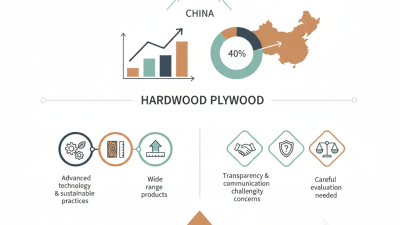
For global buyers, choosing a China-based supplier involves more than comparing prices. Hardwood Plywood must suit the product, finish, and performance requirements. A cabinet maker may need a smooth, consistent face veneer, while a furniture workshop may require stable panels in precise thicknesses. Small details matter. Ask about core construction, veneer species, moisture control, sanding quality, and available dimensions before requesting a quotation. Clear specifications can prevent costly misunderstandings later.
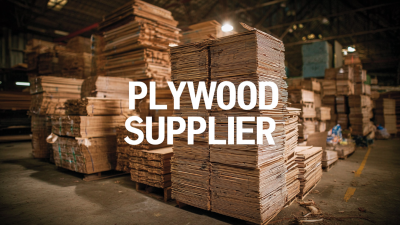
This guide explores practical ways to assess suppliers, from sample quality and production capacity to communication and export packaging. Request samples that match the proposed order, then inspect the veneer surface, edges, bonding, and thickness. Where relevant, ask for test reports or certificates, and confirm what each document covers. Do not rely on a polished website alone. Recent production photos and direct answers to technical questions can help, but they are not proof of consistent quality. That distinction is easy to overlook. Buyers should also compare lead times, minimum order quantities, packing methods, and defect-handling procedures in writing. Requirements vary by project and destination, so confirm applicable specifications with qualified professionals before placing an order. Even experienced purchasing teams can miss a small mismatch between a sample and a bulk shipment. A careful review will not remove every risk, but it can make supplier selection more informed and transparent.
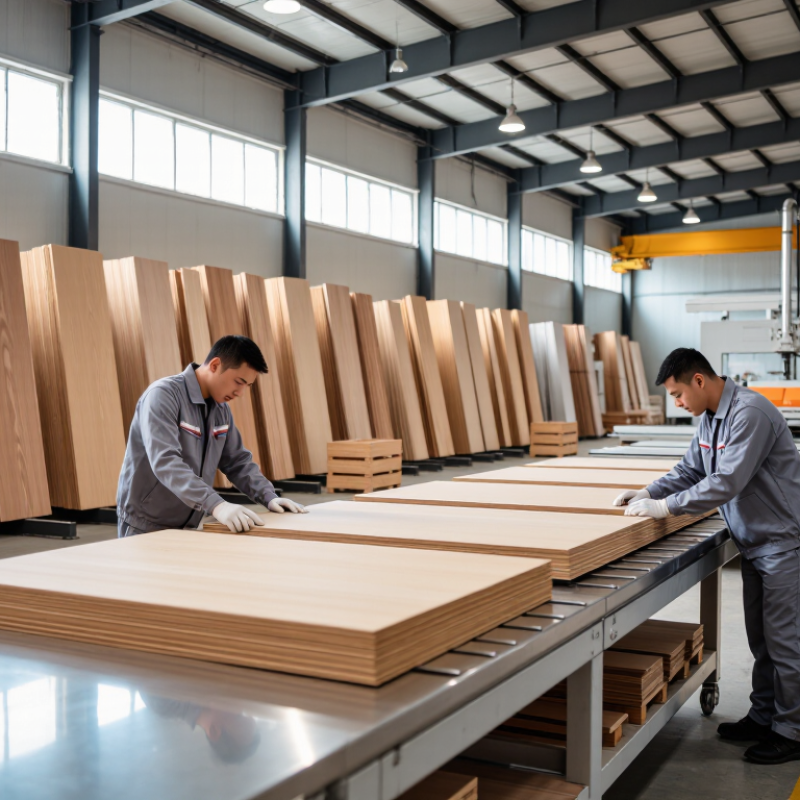
Hardwood plywood is an engineered panel made from thin wood veneers, not a solid piece of hardwood. In China, production commonly begins with peeled or sliced veneers that are dried and sorted. Face veneers provide the visible grain, while inner plies form the core. Species and core construction vary by mill and product specification. That matters.
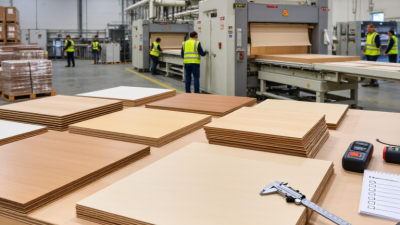
Before assembly, workers check veneer thickness and moisture, since uneven sheets can affect bonding and flatness. Veneers are arranged with adjacent grain directions crossing, then adhesive is applied between layers. A hot press uses heat and pressure to bond the panel. After pressing, panels are trimmed, sanded, and inspected for surface defects, thickness, and edge quality. Small defects happen.
Manufacturing controls are not identical across factories, so buyers should define requirements clearly. Specify face appearance, core material, thickness tolerance, bonding performance, and any relevant emissions documentation. Ask how the supplier checks moisture and consistency between production batches. A sample is useful, but it cannot represent every shift. Check several panels, including the edges, and compare them with the written specification before confirming an order.
| Topic | Dimension | Details | What Global Buyers Should Check |
|---|---|---|---|
| Product definition | Construction | Hardwood plywood is a panel made by bonding multiple wood-veneer layers. Adjacent veneer grains are generally laid at right angles to improve dimensional stability. | Confirm the number of plies, veneer arrangement, and whether the product is hardwood-faced, hardwood-core, or made with hardwood throughout. |
| Species and appearance | Face veneer | Common hardwood face options may include birch, poplar, eucalyptus, and other species, depending on availability, product grade, and intended use. | Request the declared species, face grade, repair policy, and approved appearance sample. Species availability should be confirmed for each order. |
| Core construction | Core material | Depending on the product, the core may use veneer layers or other specified wood-based construction. Core composition affects weight, screw holding, and panel consistency. | Ask for a written core specification and confirm that the production sample matches the order specification. |
| Manufacturing | Veneer preparation | Logs or prepared timber are conditioned and peeled or sliced into veneer. Veneer is then dried and sorted before lay-up. | Check veneer moisture-control procedures and the permitted limits for core gaps, overlaps, and repairs in the agreed quality standard. |
| Manufacturing | Adhesive and lay-up | Adhesive is applied to veneer layers, which are assembled in a cross-grain arrangement. Adhesive type and panel construction vary by product and intended application. | Specify the adhesive type and required formaldehyde-emission documentation. Do not assume an emission class from the product name alone. |
| Manufacturing | Pressing and finishing | The assembled panel is hot-pressed, conditioned, trimmed, sanded, and inspected. Some products receive additional surface treatments or overlays. | Agree on thickness tolerance, sanding quality, edge condition, surface repairs, and inspection criteria before production. |
| Common order options | Thickness and dimensions | Common nominal thicknesses include 3, 5, 9, 12, 15, and 18 mm. A frequently offered sheet size is 1220 × 2440 mm; other sizes may be available. | These are common market options, not guaranteed specifications. Confirm actual dimensions, tolerances, and availability on the quotation and purchase order. |
| Grades and use | Surface and application | Face grades and panel performance depend on the applicable product specification. Hardwood plywood may be used for furniture, cabinetry, interior joinery, and other applications when suitable for the conditions. | Match the face grade and panel specification to the intended use. For exterior or humid conditions, obtain evidence that the panel and bond are suitable for those conditions. |
| Standards and compliance | Documentation | China has national plywood standards, including GB/T 9846. Export requirements may also depend on the destination market, application, and buyer specification. | Identify the exact standard and edition required. Request current test reports and confirm the tested product construction, thickness, and manufacturing source. |
| Supplier evaluation | Quality assurance | A reliable sourcing process typically includes a written specification, pre-production approval, production inspection, and shipment documentation. | Verify manufacturing capability, traceability, quality-control records, sample consistency, packaging details, and willingness to support independent inspection. |
| Shipping preparation | Packaging and moisture protection | Plywood is commonly packed in bundles or crates for transport. Appropriate protection helps reduce damage and moisture exposure during handling and shipping. | Agree on bundle dimensions, quantity per package, edge protection, moisture-resistant wrapping, shipping marks, and loading plan. |
Buyer note: Product specifications and availability vary by manufacturer and order. Confirm all dimensions, grades, adhesive requirements, emissions documentation, and intended-use performance in writing before placing an order.