Top China OSB Supplier for Global Buyers in 2026?
In the evolving landscape of global supply chains, identifying a top China OSB supplier is essential for buyers in 2026. Experts in the field highlight the crucial role of these suppliers in meeting increasing global demand. According to Zhang Wei, a noted industry analyst, "China's OSB market is at the forefront of innovation and reliability."
The China OSB supplier industry is marked by rapid advancements and competitive pricing. However, challenges persist in quality assurance and sustainability practices. Buyers face the dilemma of balancing cost with essential quality standards. Not every supplier can deliver consistent performance, creating a need for rigorous vetting.
Moreover, regional disparities in production capabilities affect supplier reliability. With the increasing complexity of furniture and construction markets, there is no room for compromise. Buyers must tread carefully in their choices. As Zhang Wei reminds us, "Choosing the right supplier today shapes the success of tomorrow's projects.

Overview of OSB Industry in China
The OSB (Oriented Strand Board) industry in China is rapidly evolving. As demand for sustainable building materials increases, China's OSB production has surged. Many manufacturers are focusing on eco-friendly practices and improving production processes. This shift is crucial in meeting both domestic and international standards.
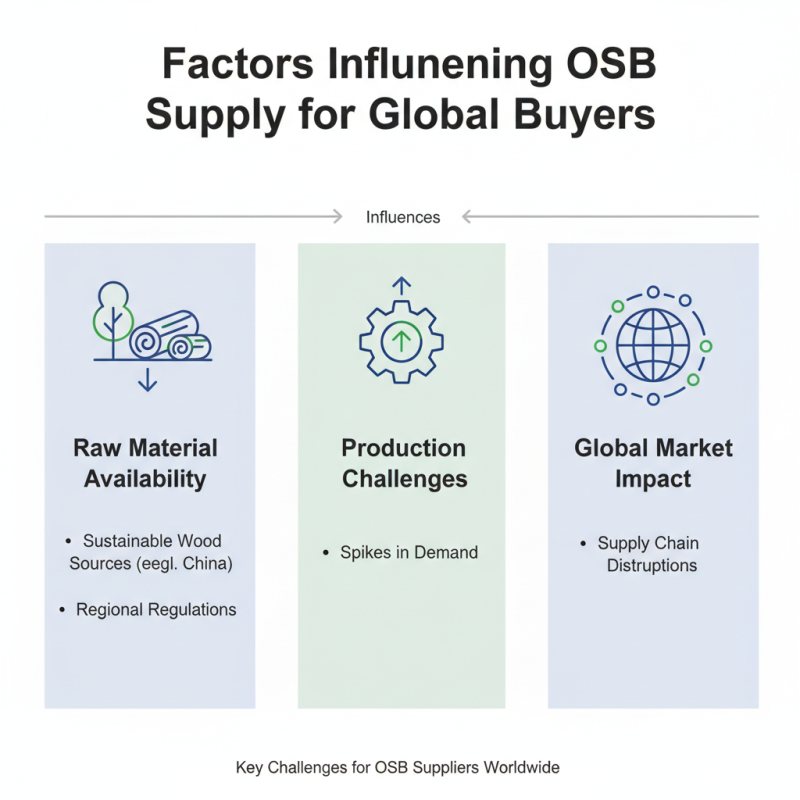
The supply chain in the OSB sector remains complex. Sourcing raw materials, like wood strands, has become a challenge. Environmental concerns and regulations impact availability. This creates an opportunity for suppliers to innovate and develop sustainable sourcing strategies. Chinese manufacturers are exploring alternative materials to mitigate this issue.
However, not all OSB products are created equal. Variability in quality can arise from differing manufacturing practices. Buyers must evaluate suppliers thoroughly. Understanding the nuances of different production techniques is essential. As global markets demand higher quality standards, Chinese suppliers must adapt. Continuous improvement in production methods will be critical for future success.
Key Players in the Chinese OSB Market
The Chinese OSB market is poised for significant growth in 2026. Key players have begun refining their strategies to cater to global buyers. Recent reports indicate that demand for oriented strand board (OSB) in construction is rising. By 2025, the market is projected to reach $13 billion, reflecting a compound annual growth rate (CAGR) of over 8% from 2021.
Several manufacturers are investing in innovative technologies. They aim to improve production efficiency and sustainability. For instance, eco-friendly materials are becoming more common in OSB production. However, there is still room for improvement. Quality control remains a challenge for many factories. Ensuring consistency is vital for satisfying international market standards.
In terms of market share, analysts suggest that the top companies control a significant portion of the market. However, smaller players are gaining traction by offering customization and flexible solutions. This trend indicates a shifting landscape, where adaptability could determine success. The Chinese OSB sector is dynamic, but challenges persist, particularly in meeting diverse international regulations. As competition intensifies, strategic innovation will be critical for these players.
Top China OSB Supplier for Global Buyers in 2026
Future Trends in China's OSB Production and Exports
China has solidified its position as a leader in oriented strand board (OSB) production. By 2026, projections indicate significant growth in both production and exports. According to a recent report from the China National Forest Products Industry Association, OSB production capacity is expected to reach 30 million cubic meters by 2026. This growth is driven by increasing domestic demand and expanding international markets.
A notable trend is the rising demand for eco-friendly materials. Many manufacturers are adopting sustainable practices to improve product appeal. Reports indicate that around 60% of construction companies prefer OSB that adheres to environmental standards. As China's OSB industry evolves, it's important for buyers to stay aware of potential supply chain fluctuations. Market analysis suggests that global demand may outpace production in certain regions.
Tips: When considering OSB procurement, focus on suppliers with transparent sourcing practices. Verify their certifications related to sustainability. Always ask for product samples to assess quality before making bulk purchases.
Strategies for Global Buyers to Partner with Chinese Suppliers
As global demand for oriented strand board (OSB) increases, partnerships with Chinese suppliers become critical. In 2026, the global OSB market is projected to reach approximately $15.6 billion, driven by construction and furniture sectors. This growth presents an opportunity for international buyers to leverage China’s robust manufacturing capabilities. Establishing reliable connections helps in securing quality materials at competitive prices.
To effectively partner with Chinese suppliers, understanding market trends is essential. A recent industry report highlights that 70% of Chinese manufacturers prioritize sustainability and innovation. Buyers should seek suppliers committed to eco-friendly practices, as this aligns with shifting global consumer preferences. Conducting thorough supplier audits and maintaining open communication can enhance trust and ensure compliance with international standards.
However, challenges remain. Language barriers and cultural differences can complicate negotiations. Buyers must invest time in understanding these nuances. Moreover, fluctuating raw material costs require ongoing market analysis. Engaging local experts may help navigate these complexities, while fostering mutual growth. Creating strong relationships through transparency and feedback can lead to long-term success in this dynamic market.
Top China OSB Supplier for Global Buyers in 2026
| Supplier Location |
Production Capacity (m³/year) |
Export Experience (Years) |
Sustainability Practices |
Quality Certifications |
| Northeast China |
300,000 |
15 |
Recycled Materials Use |
ISO 9001, FSC |
| Central China |
500,000 |
10 |
Carbon Neutral Goals |
ISO 14001, CE |
| Southern China |
400,000 |
20 |
Ecosystem Preservation |
FSC, EUTR |
| Western China |
250,000 |
5 |
Waste Reduction Initiatives |
ISO 9001 |