Is Osb Board Waterproof for Outdoor Use in 2026?
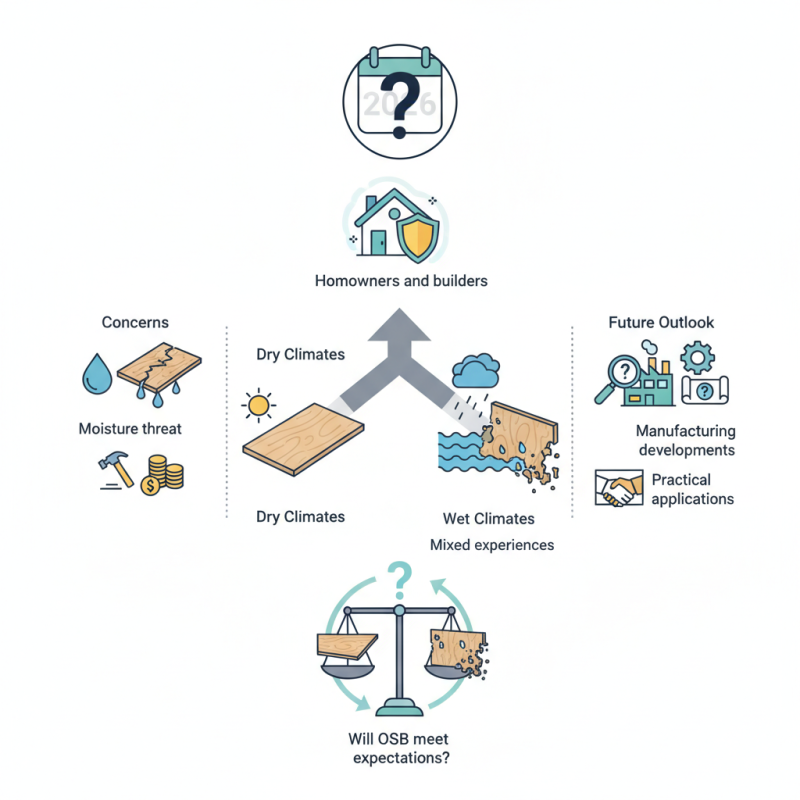
In the discussion of construction materials, the question of whether Osb Board is waterproof for outdoor use in 2026 has gained attention. Homeowners and builders are eager to understand its durability. Osb Board Waterproof features are often highlighted, but what does this really mean?
This material offers benefits for various projects. It’s affordable and easy to work with. However, concerns about its long-term performance arise. Can it withstand harsh weather conditions? Moisture often poses a significant threat. Over time, water damage can occur, leading to costly repairs.
Some users report mixed experiences with Osb Board. While it performs well in dry climates, others find issues in wet areas. It cannot be ignored; understanding its limitations is essential. Evaluating its waterproof capabilities is crucial for the best results. Will Osb Board meet expectations in 2026? The answer will depend on future developments in manufacturing and practical applications.
Is OSB Board Naturally Resistant to Water Damage?
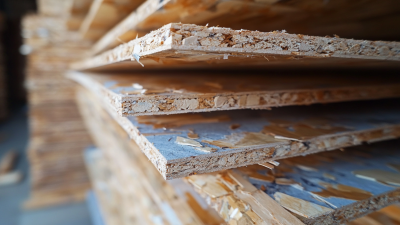
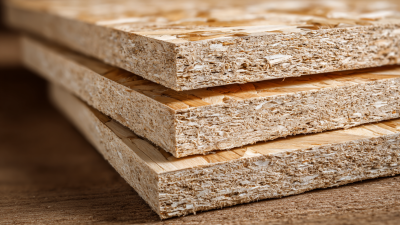
Oriented strand board (OSB) is commonly used in construction. However, its natural resistance to water damage is often debated. Research suggests that while OSB is not inherently waterproof, it does have some level of water resistance. Studies show it can withstand moisture better than traditional wood. For example, OSB’s resin-formed structure allows it to perform reasonably well in damp conditions.
Yet, OSB absorbs water over time, leading to potential degradation. When exposed to heavy rain or prolonged humidity, it swells and loses structural integrity. According to industry reports, areas with excessive moisture should consider proper sealing techniques. It is crucial to apply water-resistant coatings before outdoor installation. The durability of OSB outdoors can vary widely based on environmental factors.
Although OSB can serve as a practical option for many outdoor applications, care must be taken. Users should reflect on the intended use and specific climate impacts. In cases of high moisture, alternatives may be worth exploring. OSB’s vulnerabilities can be mitigated, but only with proper foresight and treatment. This opens a discussion on more robust materials for outdoor longevity.
Water Resistance of OSB Board Over Time
This chart illustrates the increasing water resistance score of OSB board from the year 2000 to the projected levels in 2026. As technologies and treatments improve, the water resistance of OSB is expected to enhance significantly.
Factors Affecting OSB Board Durability in Wet Conditions
When considering OSB board for outdoor use, understanding factors affecting its durability in wet conditions is crucial. Moisture exposure can lead to swelling and warping. This degradation compromises the board's structural integrity. The resin used in OSB plays a vital role. Higher quality resins tend to offer better moisture resistance. However, not all boards boast the same level of protection.
Tips for enhancing OSB durability include sealing edges. A simple coat of exterior sealant can create a barrier against water. Another method is to store the boards off the ground. This prevents direct contact with soil moisture. Additionally, consider installing OSB in well-ventilated areas. Good airflow helps in reducing trapped moisture.
Despite these measures, OSB may not be completely waterproof. Sometimes it performs poorly in prolonged wet conditions. Users should be prepared for potential issues like delamination. Regular inspections also help identify early signs of wear. This proactive approach can save money and effort in the long run. Balancing practicality and performance remains essential when choosing materials.
Comparative Analysis: OSB Board vs. Plywood for Outdoor Use
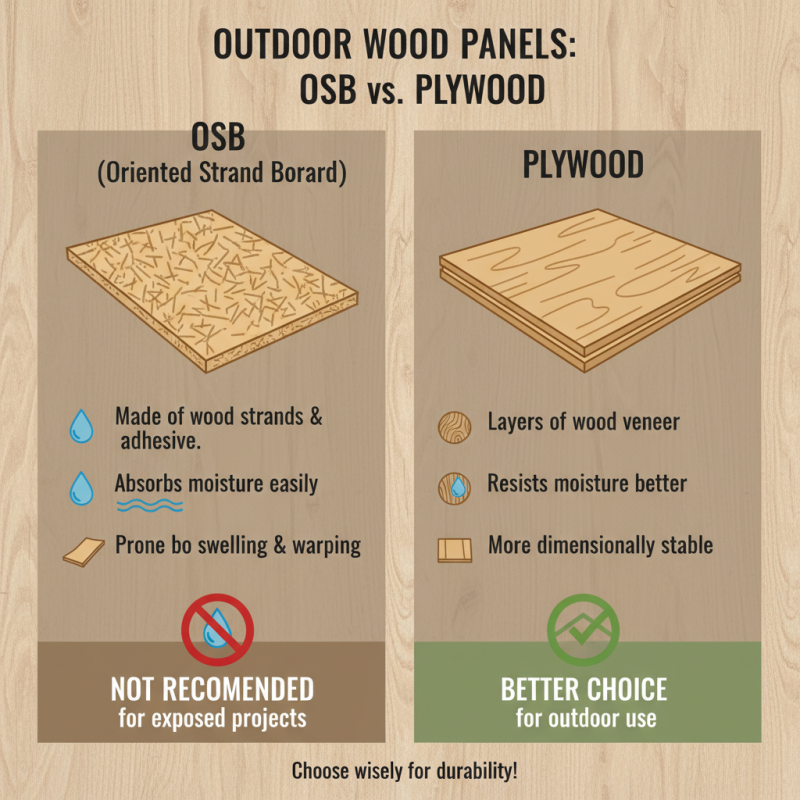
When considering OSB board and plywood for outdoor use, it's essential to compare their properties. OSB, or oriented strand board, is made from wood strands and adhesive. It tends to absorb moisture more readily than plywood. This can lead to swelling or warping over time. If a project is exposed to rain or humidity, OSB may not hold up as well.
Plywood, on the other hand, is made from thin layers of wood veneer. These layers are glued together to create a more stable and resilient material. It has better resistance to moisture compared to OSB, making it a safer choice for outdoor applications. However, the cost may be higher. Some project budgets may not accommodate this, leading to tough decisions.
In reality, both materials have their pros and cons. OSB can work for temporary structures, but it might require additional weatherproofing for longevity. Plywood, while more durable, might not be necessary for all scenarios. Assessing specific project needs is crucial. A balance between cost and durability often leads to reflections on the best choice.
Best Practices for Protecting OSB Board in Outdoor Applications
When using OSB board outdoors, being cautious is essential. While OSB has good structural properties, it isn't inherently waterproof. Proper protection is vital for outdoor applications. Without care, moisture can weaken the board over time.
To enhance OSB's durability, consider sealing it. A suitable weather-resistant sealant can create a barrier against moisture. This can significantly extend the life of your OSB board. Also, try to elevate the board off the ground. Allowing air circulation beneath helps to prevent rot.
Tips for protecting OSB:
1. Use a quality sealant.
2. Store OSB in a dry area before installation.
3. Regularly check for signs of wear.
Even with precautions, OSB might show signs of deterioration if not maintained. It’s essential to inspect and replace damaged areas quickly. Outdoor conditions can be harsh. Reflect on your OSB's performance over time and adjust your protective measures as needed.
Future Innovations in OSB Technology for Enhanced Water Resistance
As we look towards 2026, the evolution of OSB (Oriented Strand Board) technology is poised to enhance its water resistance. Recent studies have indicated that innovative treatments and coatings can significantly improve the moisture resistance of OSB. For example, reports from the Forest Products Laboratory show that new polymer-based coatings can increase water repellency by up to 30%. This innovation might allow OSB to compete with traditional plywood in outdoor applications.
Despite these advancements, challenges remain. Many OSB products still struggle with long-term exposure to moisture. Some users have reported issues with swelling and delamination when not properly maintained. This highlights the importance of selecting the right OSB for specific outdoor uses. It is crucial to consider environmental factors like humidity and rainfall when exploring OSB options.
Tip: Always check for updated ratings and specifications on water resistance before purchase.
Investing in high-quality OSB with advanced water-resistant technology can save you future headaches. To maximize the lifespan of your OSB furniture or outdoor structures, regular maintenance is key. Periodic reapplication of protective sealants can also help reduce moisture infiltration.