Why Choose Osb Tongue And Groove for Your Building Projects?
Building projects often require materials that balance strength and ease of installation. One such material gaining popularity is Osb Tongue And Groove. According to the APA – The Engineered Wood Association, OSB (Oriented Strand Board) has seen a significant rise in demand, outperforming plywood in various applications since 2015. This is largely attributed to its cost-effectiveness and structural versatility.
Osb Tongue And Groove panels offer edge profiles that interlock, providing better stability and a smoother finish. Data from the National Association of Home Builders indicates that such features can reduce installation time by up to 20%. However, it's essential to acknowledge that the choice of materials should align with specific building needs and environmental conditions. While OSB performs well in many situations, moisture resistance can be a concern.
Incorporating Osb Tongue And Groove can lead to intellectual curiosity about its sustainability. Reports show that OSB production makes efficient use of wood fibers, promoting less waste. This material is a step towards greener building practices. Yet, projects must approach all materials critically, ensuring they meet long-term performance expectations. The considerations around Osb Tongue And Groove prove that informed choices are vital for any successful construction project.
Benefits of Using OSB Tongue and Groove in Construction
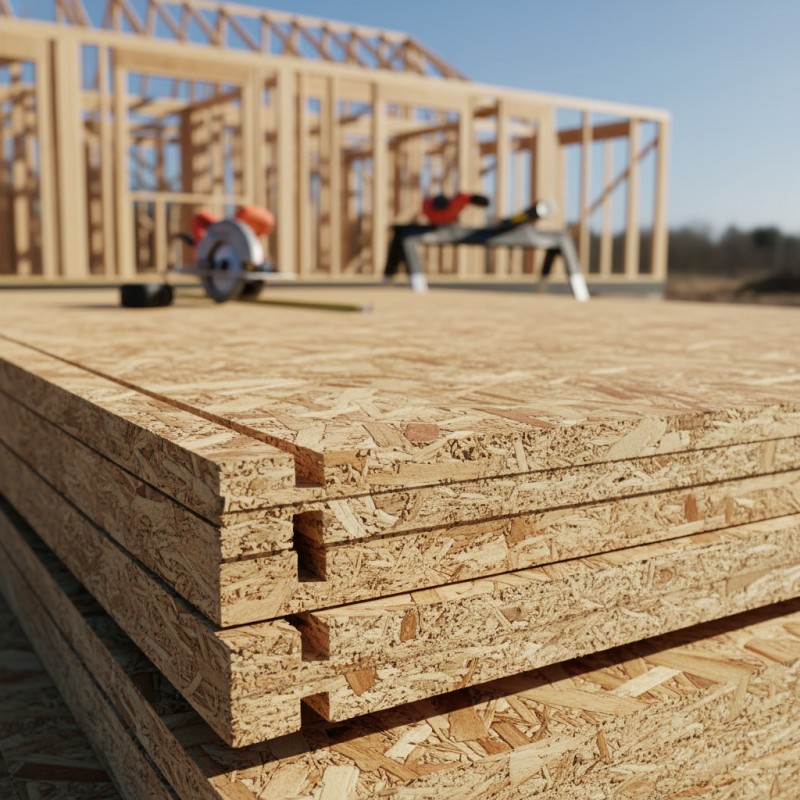
When considering materials for construction, OSB tongue and groove panels are often overlooked. Yet, they provide significant benefits that cater to various project needs. According to industry reports, OSB panels can be up to 30% cheaper than plywood, making them a cost-effective choice. Their interlocking design allows for easier installation and a more efficient build process, significantly reducing labor costs.
OSB's durability is another key strength. It has excellent resistance to deformation and can withstand high moisture levels, making it suitable for various climates. A study by the Forest Products Laboratory indicates that OSB can outperform plywood in shear strength, maintaining structural integrity under stress. However, some contractors report that inconsistent quality can sometimes be an issue, requiring careful supplier selection.
Fire resistance in OSB is also noteworthy. It meets the necessary building codes, but its performance can vary based on thickness and density. For example, thicker panels often show greater fire resistance. This means builders need to consider their specific applications when choosing thicknesses. Awareness of these factors can inform better choices in material selection, ensuring both safety and efficiency.
Benefits of Using OSB Tongue and Groove in Construction
Understanding the Composition and Structure of OSB
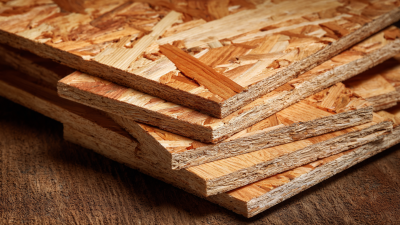
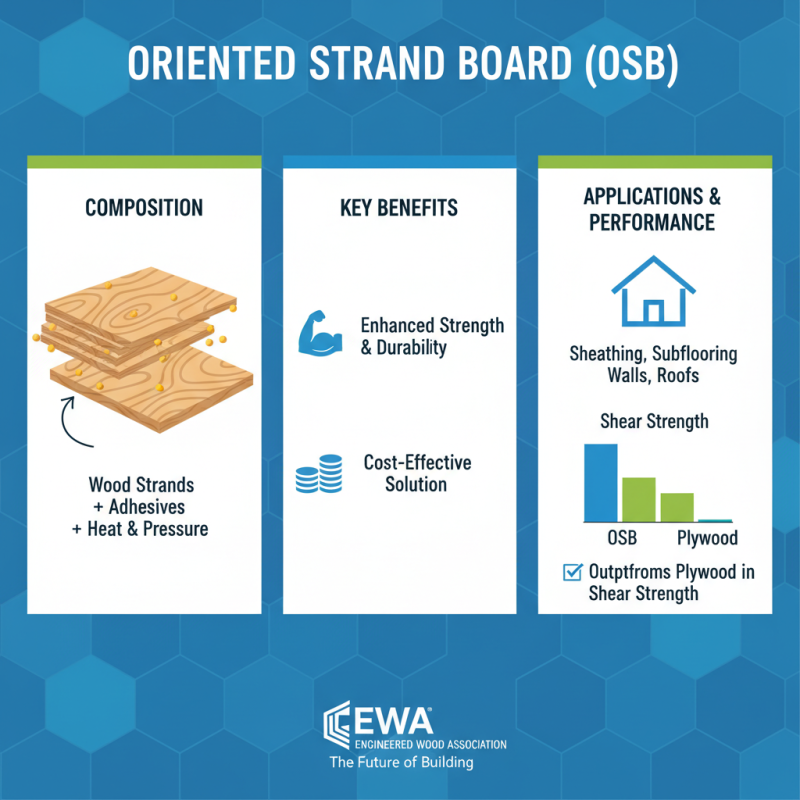
Oriented Strand Board (OSB) is gaining popularity in building projects due to its unique composition and structure. It consists of strands of wood, bonded with adhesives under heat and pressure. This structure improves its strength and durability, making it ideal for various applications. According to the Engineered Wood Association, OSB provides a cost-effective solution while maintaining high performance. In fact, it can outperform plywood in certain scenarios, particularly when it comes to shear strength.
The manufacturing process of OSB involves a careful selection of wood strands. These strands are oriented in specific directions, optimizing both tensile and compressive strength. Data indicates that OSB can bear loads similar to plywood, while being lighter and easier to handle. However, some concerns arise regarding moisture susceptibility. OSB may swell when exposed to adverse weather, which can impact its integrity. Yet, newer formulations are improving moisture resistance significantly.
A report by the USDA Forest Products Laboratory highlights the versatility of OSB in construction. It is commonly used for floor systems, wall sheathing, and roof decking. Additionally, OSB can be designed to meet specific requirements, such as fire resistance and sound insulation. While it remains a preferred choice among builders, continuous research is needed to address its limitations under extreme conditions. Ensuring optimal use of OSB involves understanding these factors.
Comparing OSB Tongue and Groove with Other Building Materials
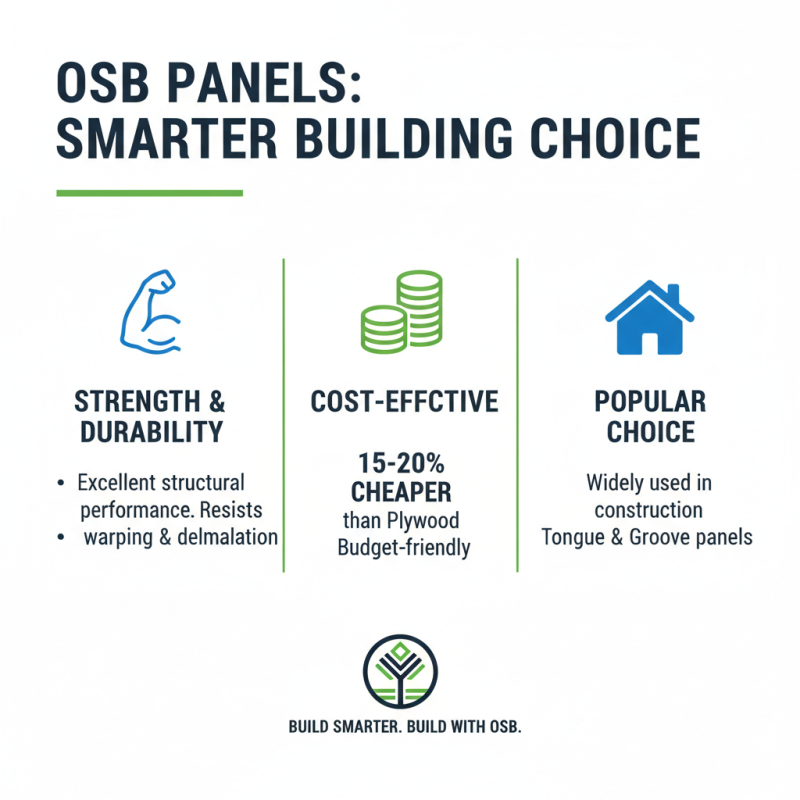
OSB tongue and groove panels are a popular choice in the building industry. Compared to plywood and particle board, OSB offers excellent strength and durability. A recent report noted that OSB is often more cost-effective than plywood, coming in at about 15-20% lower in price. This cost saving makes OSB an attractive option for builders on a budget.
OSB panels feature a unique design that allows for better structural stability. Unlike standard plywood, which can delaminate, OSB maintains integrity under various environmental conditions. This characteristic is especially useful in areas prone to moisture. However, it’s important to ensure proper sealing, as OSB can absorb water if left unprotected.
Tips: When using OSB, always check for certifications to ensure quality. Not all OSB is created equal. Some panels might have a higher level of resin, which improves durability. Also, consider the thickness needed for your project. The choice between 7/16” and 5/8” thickness can affect both insulation and structural performance. Take the time to assess long-term needs to avoid costly repairs later on.
Applications of OSB Tongue and Groove in Various Building Projects
OSB tongue and groove is increasingly popular in various building projects due to its practicality and versatility. One of the most common applications is in flooring. The interlocking design provides a sturdy surface while allowing for easy installation. According to industry reports, flooring made from OSB can perform comparably to plywood, providing similar strength at a lower cost.
Another area where OSB tongue and groove shines is in wall sheathing. Its structural integrity supports both insulation and exterior cladding effectively. A survey by a construction materials group noted that builders frequently prefer OSB for wall installations because it reduces material waste. This not only cuts costs but also supports sustainability.
Tips: Always ensure proper ventilation when using OSB in enclosed spaces. Moisture can be detrimental. Additionally, remember that while OSB offers many benefits, it may not be the best choice for areas with high humidity. Be mindful of where you install it.
Consider the overall design when using OSB. Some builders express concerns about aesthetics. If the finished look matters, you might need additional treatments or finishes. While OSB has many advantages, it’s wise to reflect on its fit for your specific project conditions.
Cost-effectiveness and Sustainability of OSB Tongue and Groove Solutions
OSB tongue and groove panels are gaining popularity for building projects, especially due to their cost-effectiveness and sustainable nature. They are made from oriented strand board, which utilizes wood strands efficiently. This method reduces waste, making it an eco-friendly choice. Furthermore, OSB is often cheaper than traditional lumber, which helps manage project budgets better.
When choosing materials, consider durability. OSB tongue and groove products offer a robust alternative. They can withstand various environmental factors. Additionally, they are easy to install. This can save time during construction, a precious commodity for any builder.
Tips for selecting OSB tongue and groove: Always check for quality marks. Not all products are created equal. Examine thickness options based on your needs. A thicker panel may provide better insulation. Consider your project's specific requirements, like moisture resistance. Reflect on how these factors impact your build. Every detail matters in achieving a successful project.
Why Choose OSB Tongue And Groove for Your Building Projects?
| Benefit |
Description |
Cost-effectiveness |
Sustainability |
| Material Efficiency |
Maximizes the use of wood fibers, reducing waste. |
Lower material costs due to high yield. |
Utilizes sustainable forestry practices. |
| Insulation Properties |
Provides good thermal performance, reducing energy costs. |
Cost savings on heating and cooling expenses. |
Reduces carbon footprint through energy efficiency. |
| Durability |
Resistant to warping and bending, ensuring long-lasting use. |
Reduces the need for replacements, saving costs. |
Less waste generated from regular replacement. |
| Ease of Use |
Simplifies installation process due to tongue and groove design. |
Reduces labor costs and time. |
Promotes efficient construction methods. |
| Aesthetic Appeal |
Provides a visually pleasing finish that can enhance design. |
Increases property value through design appeal. |
Supports environmentally friendly design initiatives. |