What is China OSB Supplier and How to Choose the Right One for Your Project
As the demand for engineered wood products continues to rise, the role of a reliable China OSB Supplier becomes increasingly crucial in the global marketplace. Oriented Strand Board (OSB) is favored for its strength, versatility, and cost-effectiveness, making it an ideal choice for various construction and furniture applications. According to a recent report by Smithers, the global OSB market is projected to reach $25 billion by 2025, illustrating the significant growth potential within this sector.
When selecting the right China OSB Supplier, project managers must consider several key factors including product quality, sourcing practices, and supply chain reliability. Industry expert Dr. Liu Wei, a leading analyst in the field, emphasizes, "Choosing the right OSB supplier is not just about price; it’s about ensuring quality and sustainability throughout the supply chain." This statement underscores the importance of making informed decisions that align with both budget constraints and project specifications.
With a myriad of suppliers available, it's essential to conduct thorough research and due diligence to identify the most suitable partner. By focusing on long-term partnerships and understanding the unique advantages each supplier offers, stakeholders can enhance their project's overall success while contributing to a more sustainable building industry.

Understanding OSB (Oriented Strand Board) and Its Uses
Oriented Strand Board (OSB) is a versatile engineered wood product made from strands of wood that are bonded together with adhesives under heat and pressure. This manufacturing process yields a material that is remarkably strong and durable, making it ideal for a variety of construction applications. OSB is commonly used in structural framing, sheathing for walls, roofs, and floors, as well as in the production of furniture and cabinets. Its unique orientation allows for excellent load-bearing capabilities, providing an effective alternative to traditional plywood.
The uses of OSB extend beyond mere structural applications. It is also employed in a range of interior design projects, such as wall paneling and decorative elements, due to its aesthetic appeal and adaptability. Furthermore, OSB is a cost-effective choice for many builders and contractors, as it typically offers a more affordable price point compared to other wood products. When selecting OSB for a specific project, it is essential to consider factors such as thickness, grade, and moisture resistance to ensure optimal performance and compatibility with your design requirements. Properly chosen, OSB can significantly enhance the integrity and appearance of construction projects.
Overview of China's OSB Market and Key Suppliers
China's OSB (Oriented Strand Board) market has seen significant growth in recent years, driven by the booming construction and furniture industries. As a versatile material, OSB is prized for its strength, affordability, and eco-friendliness, making it a preferred choice for various applications. Key suppliers in the market range from large manufacturers with extensive distribution networks to smaller companies that offer niche products and services. When selecting a supplier, it's crucial to consider not only the quality of the OSB but also their production capacity and delivery options.
Tips: When choosing the right OSB supplier, prioritize those who have a solid reputation within the industry. Look for suppliers who adhere to international standards and certifications, as this often indicates a commitment to quality and reliability. Additionally, assess their customer service and support, as having a responsive supplier can greatly enhance your project's success.
In evaluating suppliers, it’s also essential to review their sustainability practices. China’s OSB manufacturers are increasingly adopting eco-friendly production techniques and sourcing materials responsibly. By selecting a supplier that prioritizes sustainability, you not only contribute to environmental conservation but may also find increased marketability for your projects, as more clients are looking for green building materials.
Factors to Consider When Choosing an OSB Supplier in China
When selecting an OSB (Oriented Strand Board) supplier in China, several critical factors should be taken into consideration to ensure the success of your project. First, evaluate the supplier's production capacity and reliability. It is essential to choose a supplier that can meet your project deadlines and has a history of consistent quality. This involves assessing their manufacturing processes, technology used, and certifications that indicate adherence to industry standards.
Another important aspect is understanding the range of products offered by the supplier. Look for a company that provides various OSB grades and sizes to suit different applications, whether for construction, furniture, or other uses. Additionally, inquire about their sourcing practices for raw materials, as this can significantly influence the quality and sustainability of the OSB. Transparency regarding their supply chain can also be an indicator of their commitment to quality and environmental standards.
Lastly, consider the supplier's customer service and communication capabilities. A responsive supplier that can address queries promptly and provide support during the purchasing process is invaluable. Establishing a good working relationship with your OSB supplier can facilitate smoother transactions and ongoing support, ensuring that any issues that arise can be resolved efficiently.
What is China OSB Supplier and How to Choose the Right One for Your Project
| Supplier Attribute |
Description |
| Experience and Reputation |
Look for suppliers with a proven track record in the OSB market. |
| Product Quality |
Ensure the OSB meets international standards and certifications. |
| Pricing |
Compare prices but be cautious of prices that are too low. |
| Supplier Location |
Consider the logistical aspects and shipping times based on the supplier's location. |
| Customer Service |
Evaluate the responsiveness and support provided by the supplier. |
| Minimum Order Quantity |
Check if the supplier's minimum order quantity aligns with your project needs. |
| Customization Options |
Determine if the supplier offers custom sizes or specifications for your project. |
| Sustainability Practices |
Assess the supplier's commitment to sustainable materials and practices. |
Evaluating Quality Standards and Certifications for OSB Products
When evaluating OSB (Oriented Strand Board) suppliers in China, understanding the quality standards and certifications associated with their products is crucial. Key certifications often referenced include the American National Standards Institute (ANSI), the Particle Board Standards (EN 300), and ISO 9001, which ensure that the products meet international safety and performance criteria. Checking for these certifications provides a baseline assurance that the materials will perform adequately in your building projects, whether for structural applications or interior design elements.
In addition to formal certifications, it's important to assess the adherence to environmental standards, such as the Forest Stewardship Council (FSC) endorsement, which indicates that the wood used in OSB production comes from responsibly managed forests. Reviewing manufacturing practices, such as glue formulations and VOC emissions, further contributes to understanding the overall quality of the OSB. By thoroughly evaluating these aspects, you can select a supplier that not only provides high-quality OSB products but also aligns with sustainability goals that are increasingly important in construction and design industries.
Evaluating Quality Standards and Certifications for OSB Products from China Suppliers
Tips for Establishing a Good Relationship with OSB Suppliers
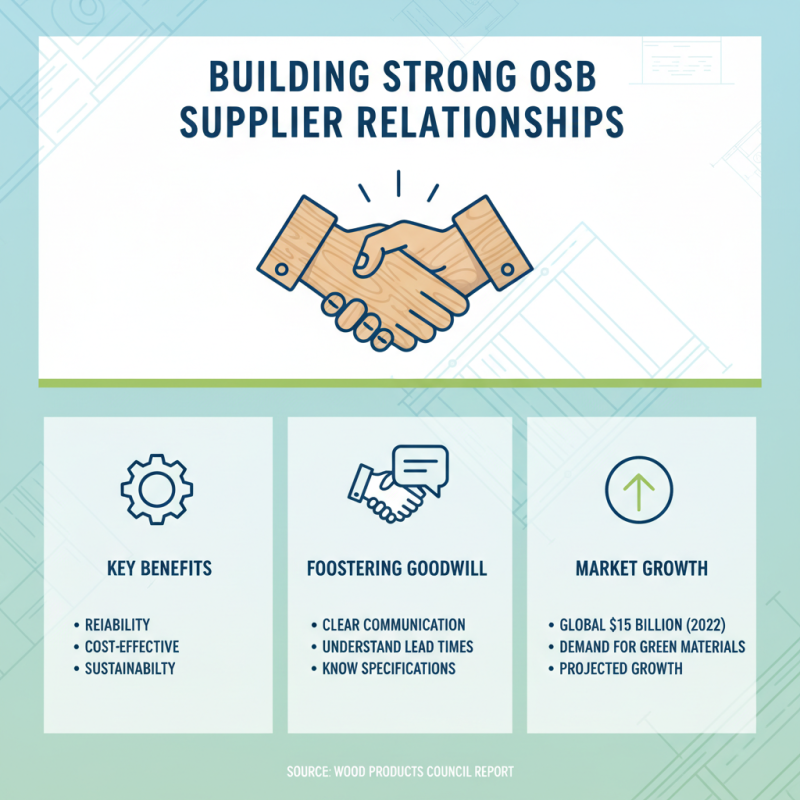
Establishing a solid relationship with OSB (Oriented Strand Board) suppliers is crucial for the success of any construction or manufacturing project. According to a report by the Wood Products Council, the global OSB market reached a valuation of approximately $15 billion in 2022 and is expected to grow significantly due to the increasing demand for sustainable and cost-effective building materials. To foster a good relationship with your OSB supplier, it is essential to maintain clear communication. Understanding their lead times, production capabilities, and product specifications can help streamline the procurement process, ensuring that your project timelines are met without unnecessary delays.
Moreover, it's essential to align your business goals with those of your supplier. Establishing mutual trust can lead to better pricing, quality control, and a reliable supply chain. A report from the Forest Products Laboratory highlights that long-term partnerships often result in an increase in product quality and innovation, as suppliers are more likely to invest in improvements when they have stable clients. Regular check-ins, sharing project updates, and soliciting feedback can enhance collaboration. Additionally, being transparent about your needs and expectations not only helps in establishing credibility but also opens the door for long-term success. These practices are not just about functionality but also about cultivating a partnership that can withstand the ebb and flow of project demands and market changes.