What is a China OSB Manufacturer and Why Does it Matter?
In the dynamic world of construction materials, the role of a China OSB Manufacturer is becoming increasingly significant. Dr. Liu Wei, an expert in this field, mentioned, "China's OSB production has transformed the global market." This highlights the influence of these manufacturers on international supply chains and project costs.
China OSB Manufacturers are key players in providing oriented strand board for various applications. They supply materials for both residential and commercial projects. These boards are valued for their strength and flexibility. However, not all products meet the same standards. This variability can lead to quality concerns that merit attention from builders and architects.
The growth of this industry raises questions about sustainability and environmental impacts. While cost-effective solutions are attractive, the environmental footprint cannot be overlooked. Engaging with reputable China OSB Manufacturers ensures that quality checks and eco-friendly practices are prioritized. Reflection on these aspects is essential for the future of construction.
What is an OSB (Oriented Strand Board) and Its Uses
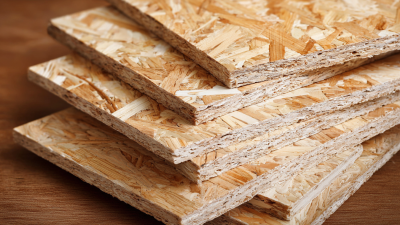
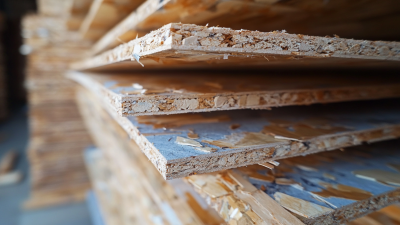
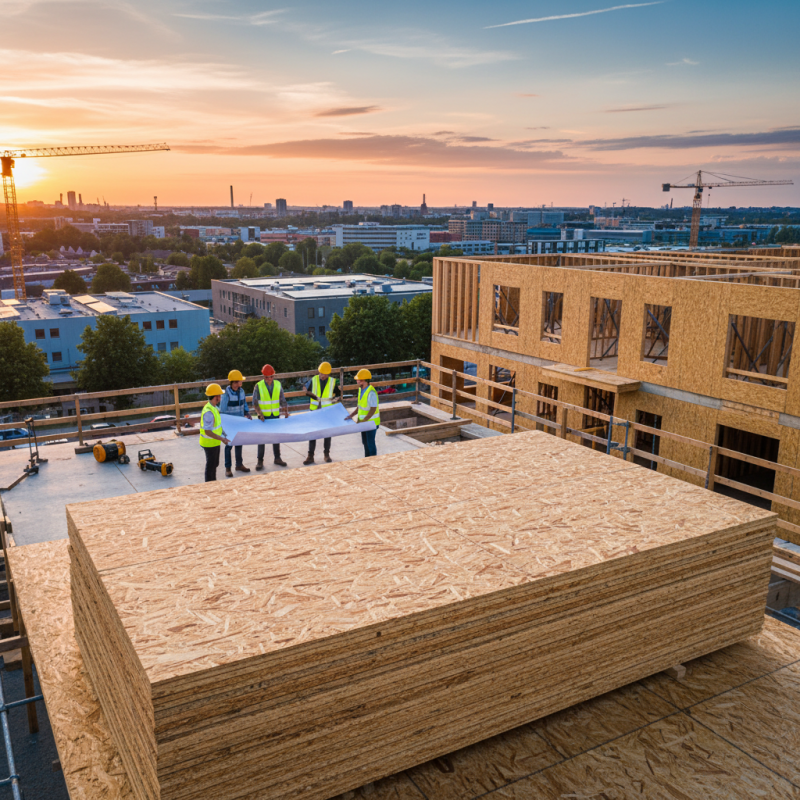
OSB, or Oriented Strand Board, is a versatile engineered wood product. It is made from strands of wood that are bonded together with adhesives. The arrangement of strands gives OSB strength and stability. It is widely used in construction due to its reliability and cost-effectiveness. Builders often choose OSB for flooring, roofing, and wall sheathing. This makes it a popular choice in residential and commercial projects.
Using OSB has both advantages and challenges. It is lightweight and easy to handle, but it can be susceptible to moisture. In wet conditions, OSB may swell or lose structural integrity. Proper installation is crucial to mitigate these issues. Despite its drawbacks, OSB remains a staple in the industry. Its availability and affordability make it an attractive option.
As the demand for sustainable materials grows, the role of OSB may evolve. Manufacturers are exploring eco-friendly adhesives and sustainable sourcing of wood. This can enhance the image of OSB as a green building material. However, the industry must continue to address concerns related to quality and performance. The future of OSB could depend on balancing these aspects effectively.
History and Development of OSB Manufacturing in China
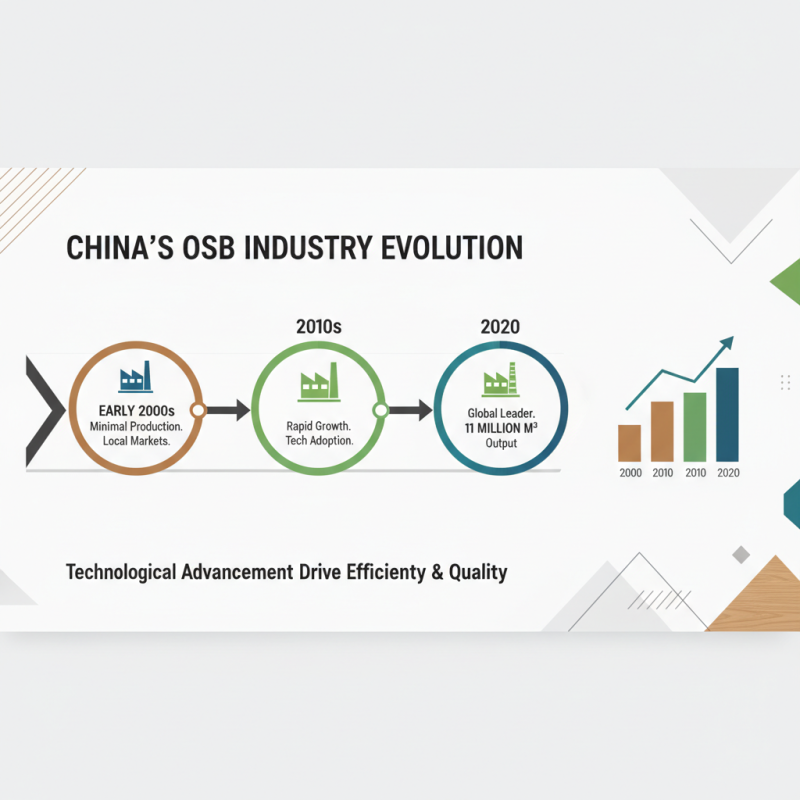
Oriented Strand Board (OSB) manufacturing has evolved significantly in China over the past few decades. In the early 2000s, production was minimal, primarily focused on local markets. By 2020, China's OSB output reached approximately 11 million cubic meters, making it one of the largest producers globally. The industry has seen rapid technological advancements, boosting efficiency and product quality.
The growth can be attributed to increasing demand in the construction sector. A report by the China National Forest Products Industry Association highlights that OSB represents about 15% of the total wood-based panel market in China. Despite this growth, the industry faces challenges. Quality control issues and inconsistent standards remain prevalent. Many manufacturers are still exploring sustainable sourcing methods. The reliance on imported raw materials, such as wood strands, adds to the complexity.
As environmental concerns grow, Chinese OSB manufacturers must adapt. Sustainable practices in forestry are vital. Failure to address these challenges may hinder future growth. Balancing production with ecological responsibility is an ongoing struggle. The path forward will require innovation and reflection on best practices in manufacturing.
Key Characteristics of China-Based OSB Manufacturers
China has become a leading player in the oriented strand board (OSB) market. Many manufacturers are known for their efficiency and cost-effectiveness. According to industry reports, the country's production capacity is over 40 million cubic meters annually. This figure reflects significant growth in recent years and showcases China's role in the global supply chain.
Key characteristics of China-based OSB manufacturers include advanced technology and high production standards. Many factories use modern machinery that enhances productivity. They often benefit from lower labor costs, which helps keep prices competitive. Reports indicate that exports from China account for nearly 30% of the global OSB market. However, challenges exist. Environmental concerns about deforestation and emissions are critical issues.
Quality control in Chinese factories can vary significantly. Some manufacturers meet international standards, while others may not. This inconsistency raises concerns for importers. Buyers should carefully evaluate suppliers and consider certifications to ensure quality. Understanding these dynamics is essential for making informed decisions in the OSB market.
Key Characteristics of China-Based OSB Manufacturers
This chart illustrates key characteristics of manufacturers based in China that produce oriented strand board (OSB). The metrics include production capacity, export volume, number of employees, and annual revenue, highlighting the scale and economic impact of these manufacturers in the OSB market.
The Role of China OSB Manufacturers in the Global Market
China plays a significant role in the global oriented strand board (OSB) market.
Approximately 40% of the world’s OSB production comes from Chinese manufacturers.
This statistic underscores the influence China holds over pricing and supply chains.
The country’s production capacity reached around 50 million cubic meters annually by 2022, according to industry reports.
It showcases their strong manufacturing base and innovative processes.
China's OSB manufacturers face challenges. The industry grapples with environmental regulations and
sustainable practices. Many factories still rely on outdated technologies. This can lead to higher emissions and resource depletion.
A shift toward sustainable production methods is necessary. Reports suggest that as global demand for eco-friendly materials rises,
Chinese producers must adapt or risk losing market share.
Quality varies among manufacturers in China. Some companies maintain high standards,
while others struggle. It’s crucial for international buyers to conduct thorough evaluations.
Issues like inconsistent product quality can impact construction timelines and costs. Increased scrutiny on sourcing OSB from China may shape
future trade relationships and production strategies.
Challenges and Innovations in China's OSB Production Industry
China's oriented strand board (OSB) industry faces significant challenges amid
global market shifts. A recent report
highlights that production capacity in China rose by 10% last year, but this
growth comes with concerns. Environmental regulations are tightening, and many
manufacturers struggle to meet these new standards. High pollution levels have drawn
scrutiny from both local communities and
regulators. Production without sustainability can lead to long-term industry risks.
Innovations are emerging but often slowly. Many companies are investing in new technologies
to improve efficiency. For instance, using renewable materials
can enhance eco-friendliness. Yet, the adoption rate remains low, with only 25%
of manufacturers implementing such changes. The dependency on traditional resources limits
potential growth. Moreover, labor costs in China continue to fluctuate, impacting profitability.
Companies must adapt or risk falling behind.
The focus on international certification
is another pressing issue. Chinese manufacturers need to meet global standards to compete
effectively. A survey revealed that nearly 70% of OSB producers are unaware of
these requirements. This gap highlights a crucial area for improvement. As the industry evolves,
overcoming obstacles will require collaboration,
innovation, and a commitment to
sustainability.